As Forest Service Rescinds Roadless Rule, the Agency Also Looks to Open Up More Land for Motorized Recreation
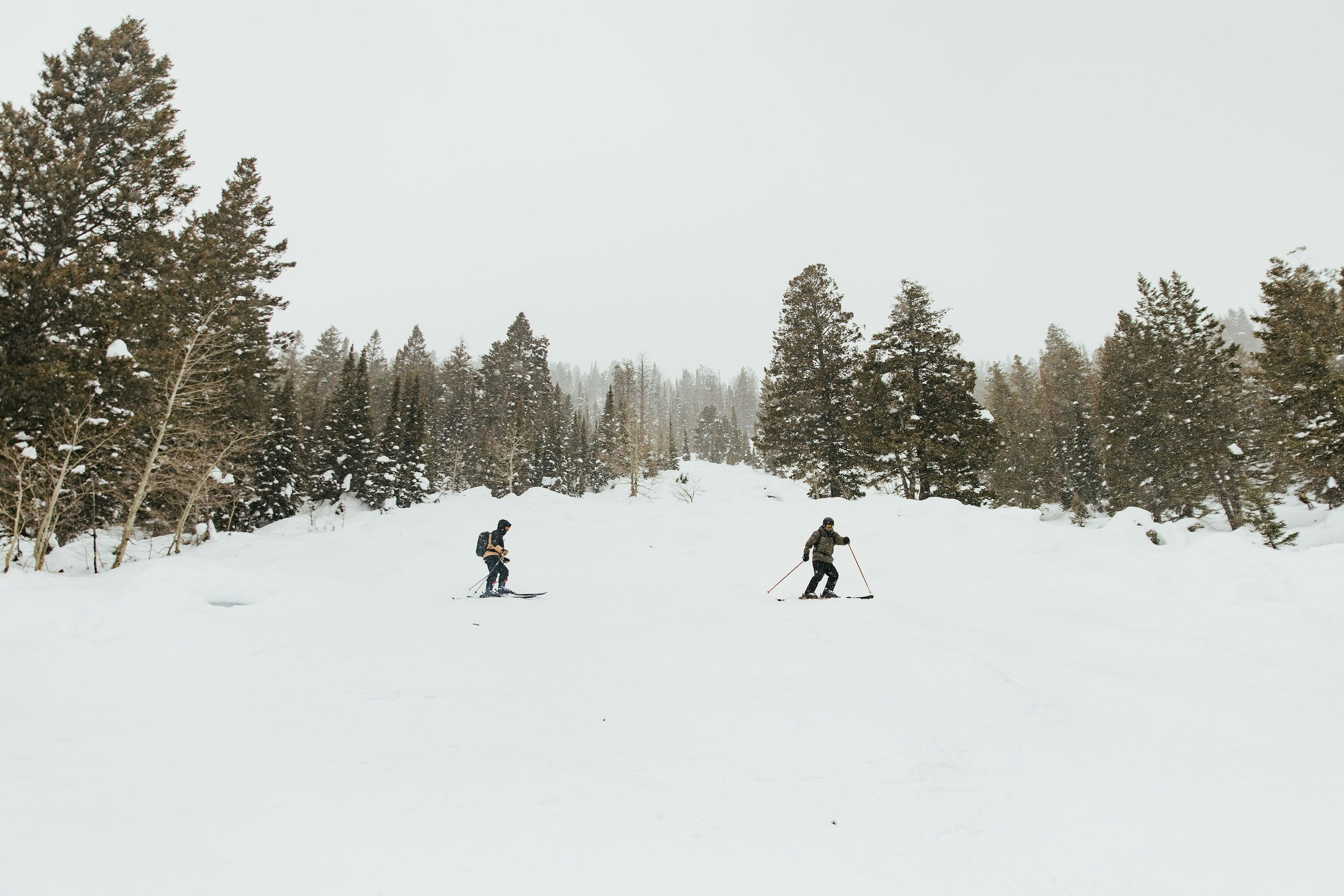
Photo credit: Ethan Walsweer
The Forest Service recently announced its intent to significantly revise its Travel Management Rule—a decades-old policy guiding where roads and motorized recreation can occur on national forests. With just 30 days to comment, Outdoor Alliance is encouraging the recreation community to weigh in and help ensure that an updated policy protects human-powered recreation opportunities and maintains a thoughtful balance among the many ways people enjoy national forests.
Outdoor Alliance submitted the following letter to the Forest Service in response to its planned revisions to the Travel Management Rule, and helped gather 21 congressional signatories to the letter.
The Travel Management Rule was adopted to help the Forest Service manage the impacts of motorized recreation, ensure sustainability, protect human-powered recreation experiences, and manage the costs of maintaining an increasingly unsustainable road system. It establishes that national forests are generally closed to motorized recreation unless areas or routes are designated open, with a clear process for designating specific roads, trails, and areas for motorized use. These designations are published on maps that help the public understand where different forms of recreation are and aren’t allowed.
Travel management planning is a priority for multiple Outdoor Alliance member organizations, including Winter Wildlands Alliance, which works to protect backcountry ski opportunities and high-quality winter recreation experiences through winter travel planning..
Earlier this summer, the Trump Administration abruptly rescinded two executive orders that have formed the legal foundation for travel management planning at multiple agencies for decades, tasking federal agencies with revising or repealing their travel management regulations. In this week’s Notice of Intent, the Forest Service outlines plans for a major revision of its Travel Management Rule in response to that directive.
Outdoor Alliance appreciates that the Forest Service plans to revise—rather than fully repeal—its Travel Management Rule. Revising the Rule creates an opportunity for recreationists to work with the agency to modernize how it considers recreation opportunities and to identify core elements of the existing rule that should remain in place. We also support the agency’s intent to leave existing travel management plans in place while the Forest Service considers updates under a new policy.
We also have some significant concerns and questions about the agency’s proposal. Most significantly, the agency is proposing to move towards an “open unless designated closed” policy that presumes that roads, trails, access points, and areas are open to motor vehicles or other forms of motorized use unless land managers determine that closure is required to comply with existing law or address environmental, public safety, or other concerns. This is a major shift from the current approach: roads, trails, and areas that are currently nonmotorized could be opened to motorized use unless the Forest Service takes affirmative steps to close them.
In practice, this change will require local Forest Service staff to individually review roads, trails, and areas and make complex and likely controversial decisions about whether to close these areas to motorized access. Beyond being inefficient, we are concerned that this policy will force land managers to open popular trails to motorized use without full consideration of impacts to environmental and cultural resources, community preferences, user conflicts, and impacts to human-powered recreation. The presumption could also apply to user-created roads, trails, and airstrips, potentially leading to further unsustainable fragmentation of national forest landscapes.
Beyond the “open unless designated closed” policy, some other concerning changes in the Forest Service’s proposed policy include:
Rescinding the criteria that forests use to minimize user conflicts and impacts to sensitive resources like wildlife, soils, and water quality;
Establishing a new national policy allowing forests to authorize off-route motorized travel;
Relying on recently-weakened NEPA regulations as a primary backstop for access decisions;
Removing public input opportunities for individual trail and road reclassifications; and
Together, these changes would dramatically change how the Forest Service manages motor vehicles on national forests and could cause a significant number of nonmotorized trails and areas to be opened to motorized recreation.
One of Outdoor Alliance’s core values is that there is room for everyone on public lands. While we do not directly represent motorized recreationists, many members of our community participate in both non-motorized and motorized activities, and we welcome opportunities to work alongside motorized recreation advocates to ensure that all recreational users can enjoy high-quality recreation experiences.