Outdoor Allies: Peter Steelquist
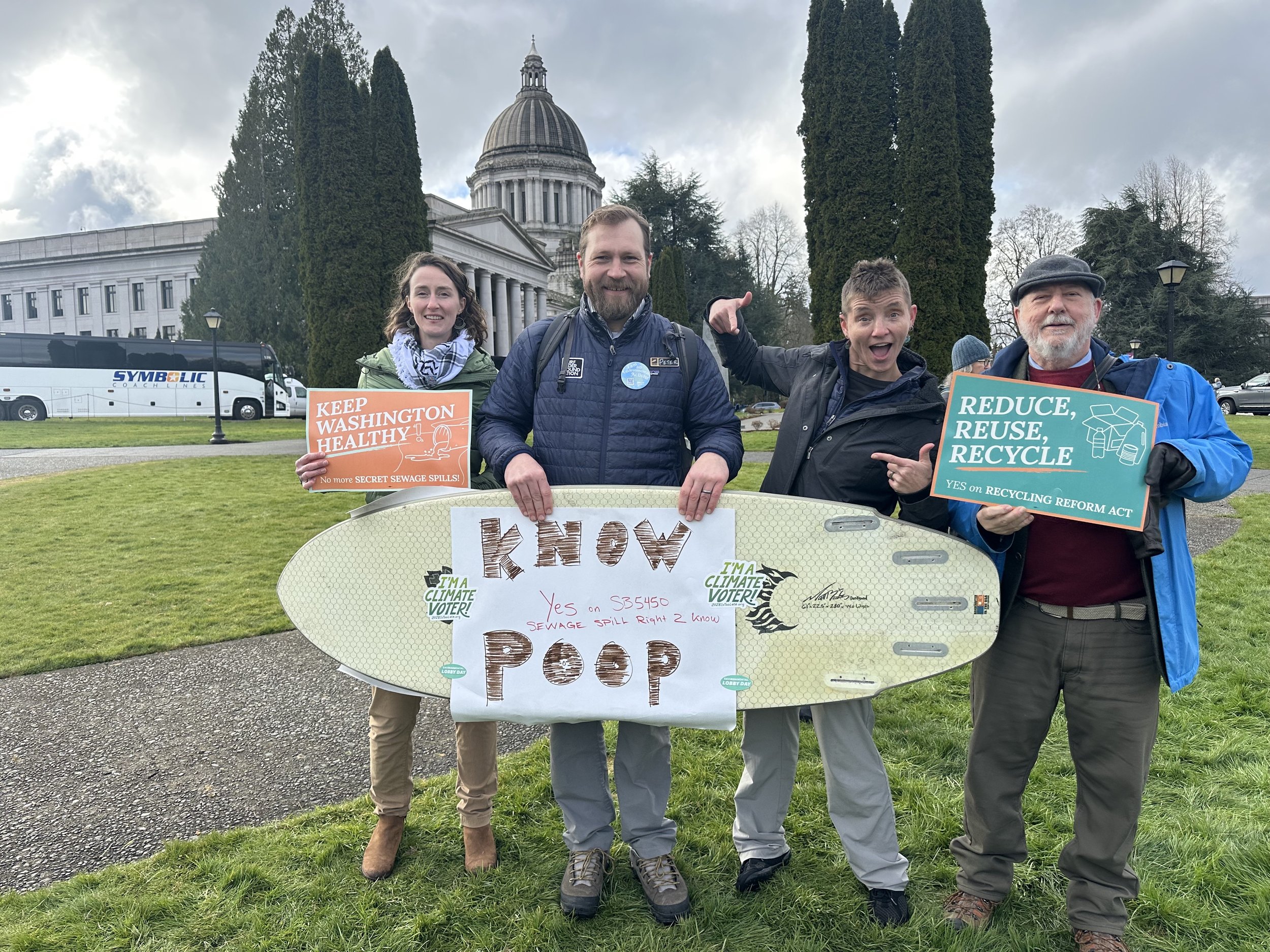
Ever wondered how you can do more for public lands but you aren’t sure where to start? Outdoor Alliance’s Outdoor Allies series explores how other outdoor adventurers got their start in advocacy work and their advice for how you can harness your passion for the outdoors into advocacy for the land and water you love. Peter Steelquist is the Washington Policy Manager for the Surfrider Foundation, one of nine member organizations at Outdoor Alliance. Pete is a lifelong Washingtonian who lives on the Olympic Peninsula. In addition to surfing, Peter is an avid mountain biker who also serves on the board of his local MTB co-op, Top Left Trails.
What do you like to do outside and how did you first get connected with the outdoors?
I grew up on Washington's Olympic Peninsula, surrounded by both the mountains and the Salish Sea. The outdoors were everything—the pillar that I could use to connect with my friends, my family and, most importantly, myself. It gave me such a positive sense of place, compared with my peers who just thought we lived in a boring podunk town.
For me, each day has a new condition to go and explore. Sometimes the surf is good, sometimes the dirt is good, and then other times the snow is good. Just following the weather and the seasons, then finding the right tool for the quiver, brings me so much joy and connection to the landscape. Tapping into these patterns really gave me an appreciation of how fragile and dynamic our ecosystems are. I spent a number of years as a dirtbag surfer/snowboarder and mountain biker, but after seeing the effects of climate change, regressive access laws, and the effects of pollution, I decided I wanted to go into environmental policy and try to channel my obsessions with the "fun stuff" to help make some good change.
Tell us more about your journey into advocacy, and how it led to your role at Surfrider?
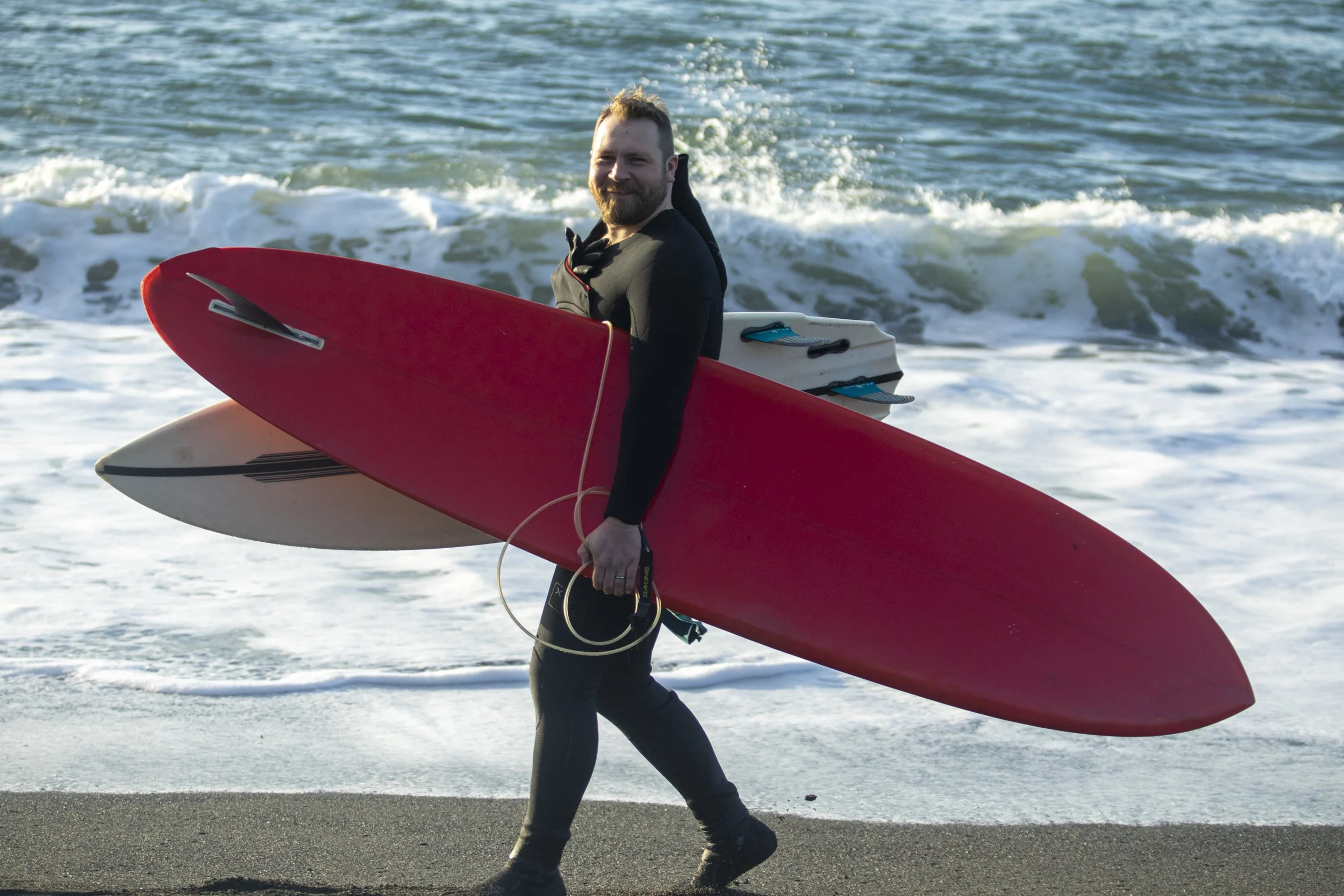
I found my local Surfrider chapter when my local beach was closed by landowners. Washington state has the most regressive beach access laws in the country. I started participating in beach cleanups, and a few years later, while working as a staffer in the State Senate, Surfrider showed up to help block the development of a crude oil terminal on the Washington coast. After that victory, I was really hooked on the power of grassroots activism.
I feel incredibly fortunate that I was able to land a role blending environmental activism with outdoor recreation and coastal advocacy. It’s been tremendous getting to do ocean advocacy through the lens of outdoor recreation. It brings so many people along on the journey of advocacy, and I love to see them go from curious, to passionate, and then empowered.
In addition to your role at Surfrider, you’re also an intricate part of Outdoor Alliance Washington, one of our regional networks. Tell us about some successes you’ve had in the state of Washington, and what you’re working on now.
I have been working with our Outdoor Alliance Washington partners on a process where the state will work with Native American Tribes to identify and manage the impacts that outdoor recreation can have on tribal treaty rights and tribal sovereignty. There are so many places we love to enjoy for our various sports, but it's easy to lose sight of the fact that a bike trail or surf break takes place on a landscape that has supported cultures for millennia.
I was also recently able to do a beach cleanup of decomposing derelict docks. We hauled out thousands of pounds of rotten styrofoam, and it really brought home how destructive styrofoam and expanded polystyrene (EPS) can be on a landscape. As large blocks degrade and break into smaller particles, these particles float and look like eggs to forage fish and birds. The impact of one derelict foam dock could create millions of EPS nodes that can last for hundreds of years. In 2022, we were able to help pass a ban on unencapsulated foam docks, and the year before that, we passed a ban on styrofoam food packaging and single-use foam coolers.
I also serve on the board of our local mountain bike trail co-op: Top Left Trails. It’s very rewarding to volunteer with another non-profit. There is nothing that feels better after a difficult week doing policy at the Capitol than going out and using a Pulaski for six hours to create some trail art.
In addition to your advocacy work, you also worked in the State Senate. How can folks effectively communicate with their legislators to make a difference for the lands and waters they love?
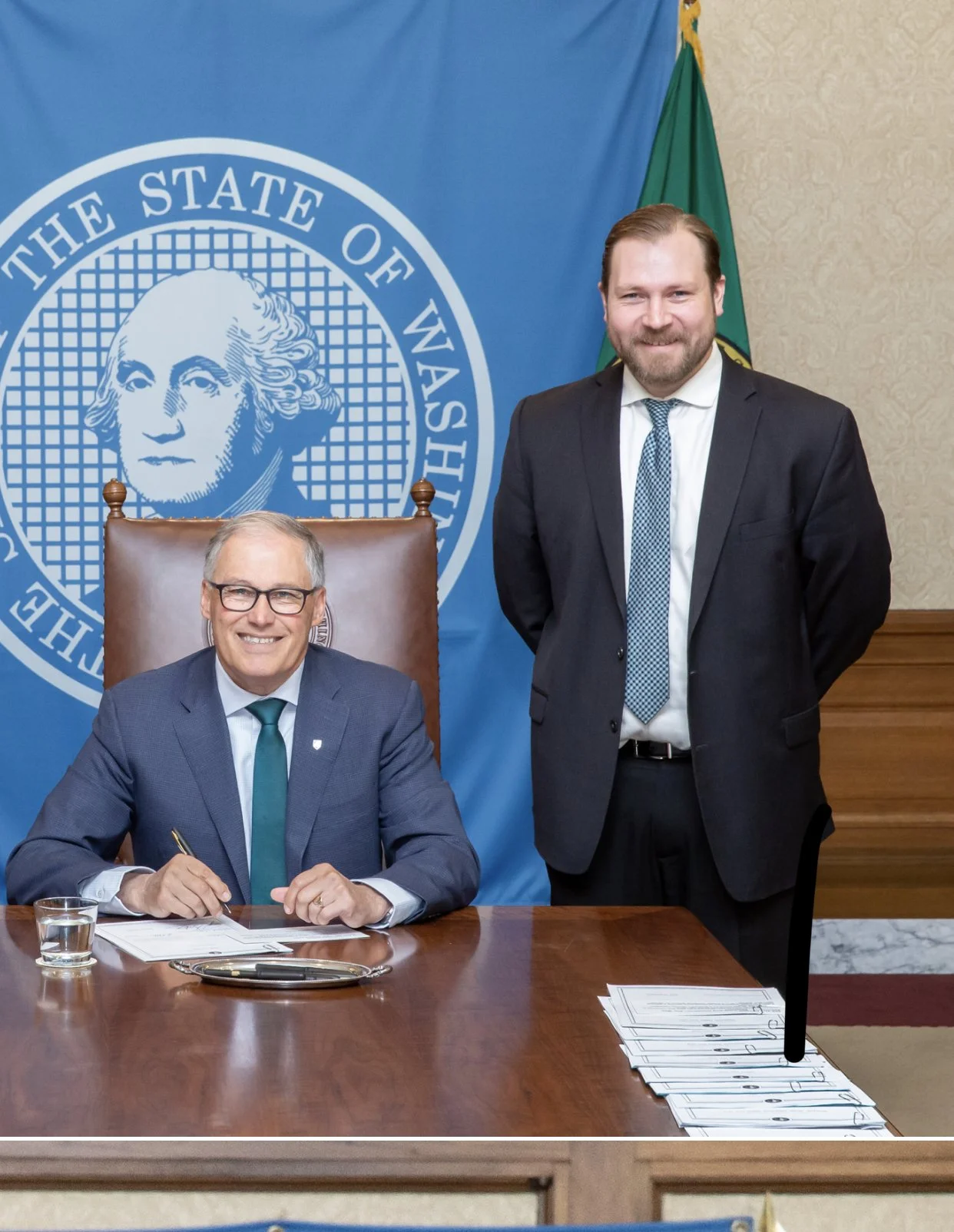
I was a staffer in the State Senate for eight years. During that time, I had countless meetings with professional lobbyists, advocates, activists, and constituents. The most meaningful interactions I had, by far, were with everyday citizens. These folks were not professionals; they came to talk about what they cared about and the problems they were facing in their communities.
The folks who took the time to build a relationship with members and staff—who followed up, continued to call, and kept providing their input—could move mountains. In today's world, lawmakers and their staff are flooded with all the problems we face as a society. When an advocate shows up to talk about their love of the outdoors, it always brings light to an office. Politicians and their staff love to be reminded of the world outside the Capitol, and meetings about a shared love of the outdoors often remind them of the joy we all share.
What would you tell someone who is looking to get more involved in public lands advocacy, but doesn’t know where to start?
Find what you are most passionate about—what inspires you to preserve and protect, or a problem to be solved. It can be a long process; use that passion as a guiding light. Take that energy to your elected leaders, and don't give up! A squeaky wheel gets the grease. Then, take what you have learned and teach others the same process.
I would also add that in order to be most effective, you have to keep yourself strong. It’s a marathon, not a sprint, and the powers that be hope that you will get tired or burned out working for change. Having the outdoors to escape and recharge is such a strength for our movement.
Surfrider is dedicated to the protection of the world’s oceans and beaches. You mentioned being a surfer, as well as an avid mountain biker. Can you tell us more about the intersection of protecting both land and water?
When I was growing up, my dad had a sticker on his truck that said: “We All Live Downstream.” I think that really stuck with me. Everything in our world is interconnected. On the Olympic Peninsula, our glaciers depend on climate and a healthy snowpack. That feeds the river, forest, and soil ecosystems, which in turn feed the Salish Sea and our oceans. The Ocean determines how our climate acts. It's such an elegant circle. The fact that we can recreate in these places is just the cherry on top. At this point, it's all hands on deck to do the work to conserve a sliver of all these places and ecosystems.
Over the past year, land management agencies have lost significant staff and funding which is having a disastrous effect on our country’s public lands and waters. NOAA has also experienced significant cuts. What is the importance of NOAA and how does it shape environmental work?
We have the Olympic Coast National Marine Sanctuary in our backyard. I have many friends and family who have dedicated their careers to NOAA and its programs, so it's hard to see those folks targeted or disenfranchised from their valuable work. NOAA is a critical source of oceanographic information we use for everything from forecasting weather, climate change, fisheries to snowpack and swell information.
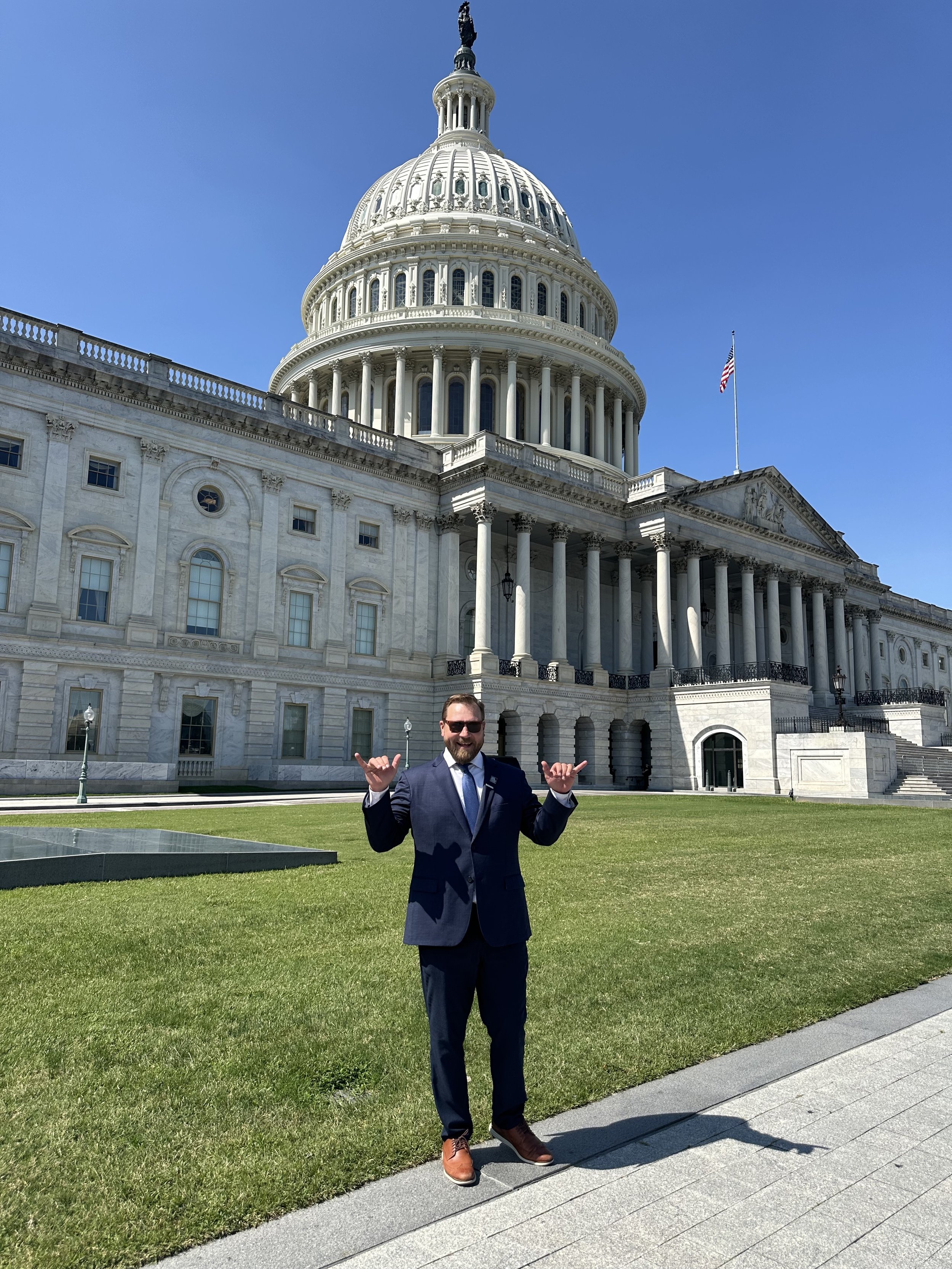
The proposed cuts to the National Ocean Service in half, eliminating funding for critical programs like Coastal Zone Management and Coastal Resilience. The administration seeks to end nearly all climate research at NOAA, reducing the workforce of climate scientists and closing research centers. Reduced funding directly endangers coastal communities by weakening hurricane forecasts, ocean monitoring, and tsunami hazards.
We are about to host Surfrider’s Ocean Recreation Hill Days, where hundreds of our volunteers meet with their congressional representatives, and we will call attention to the critical importance of NOAA.
Lightning round (one or two word answers):
Most used piece of gear: 5mm Wetsuit with 7mm Booties
A place you want to visit: Chilean Pointbreaks
Another advocate you admire: Dr. Sylvia Earle
Favorite MTB trail in WA: Vulture Ridge in the Zoo Loops, in Port Angeles.