Trip Report: Outdoor Alliance Attends the Oregon Recreation Summit
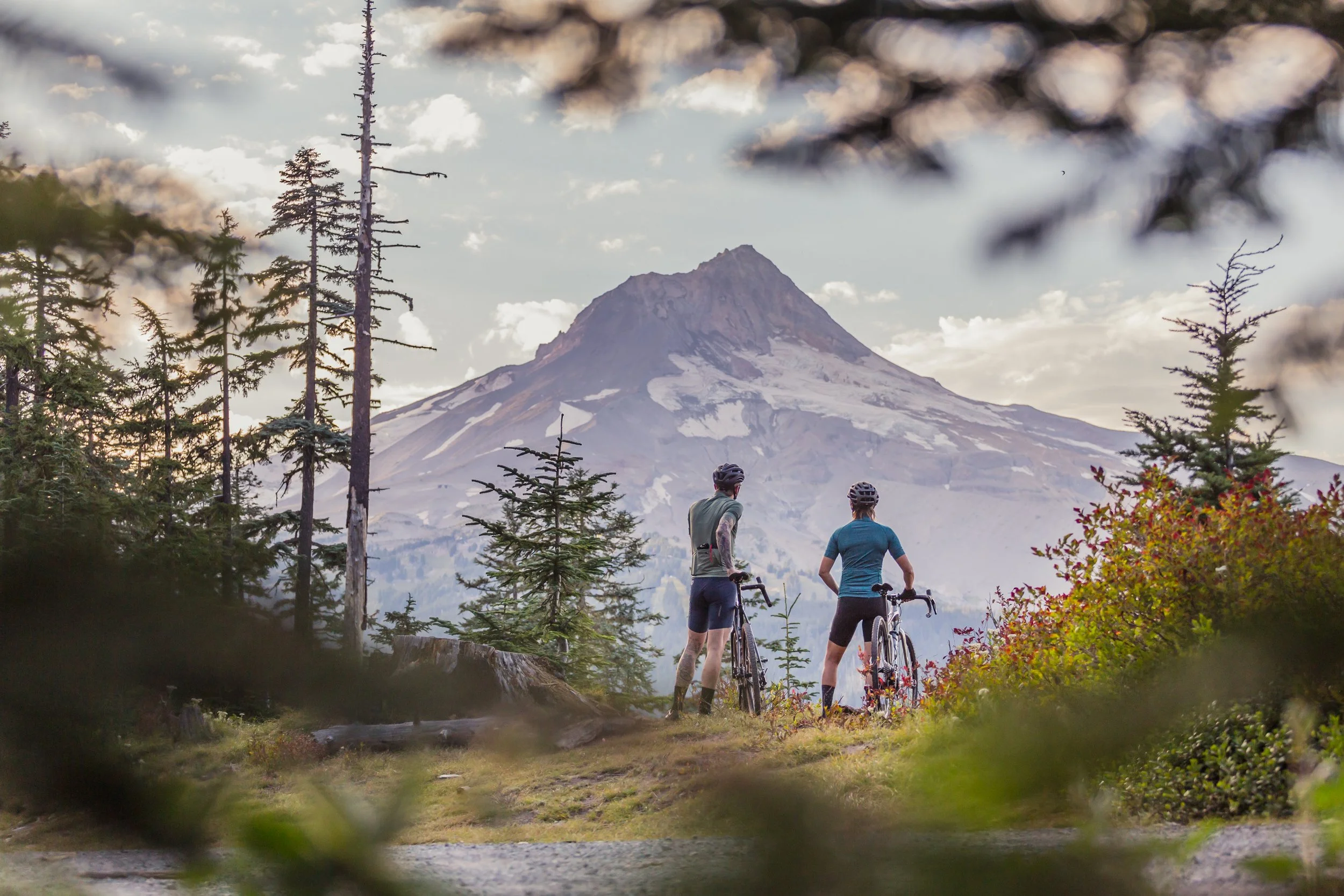
Image: Gabe Tiller, Mt Hood National Forest
Oregon is home to some of the most sought after public lands in the country. This includes a vast network of trails, rivers, forests, and crags that support a wide range of outdoor recreation activities, strengthen local communities, and contribute to economies across the state. Protecting these places depends on strong partnerships, sustained investment, and collaboration with state and federal agencies.
The Oregon Outdoor Recreation Summit is an annual gathering that brings individuals and organizations together who are working to support and improve recreation experiences in the state. The summit focuses on four major priorities:
Access to the outdoors: Expanding opportunities for people of all backgrounds and abilities to enjoy Oregon's public lands and outdoor spaces.
Sustainable recreation: Supporting responsible recreation, trail development, stewardship, and long-term conservation.
Economic prosperity: Recognizing outdoor recreation's role in supporting local businesses, jobs, tourism, and communities.
Collaboration and innovation: Building partnerships and finding solutions to challenges facing Oregon's outdoor recreation community.
Since the start of the current administration, America's public lands and waters have faced unprecedented threats. The stakes are particularly high in Oregon, which is home to 32.5 million acres of federal public lands, including National Forests and lands managed by the Bureau of Land Management (BLM).
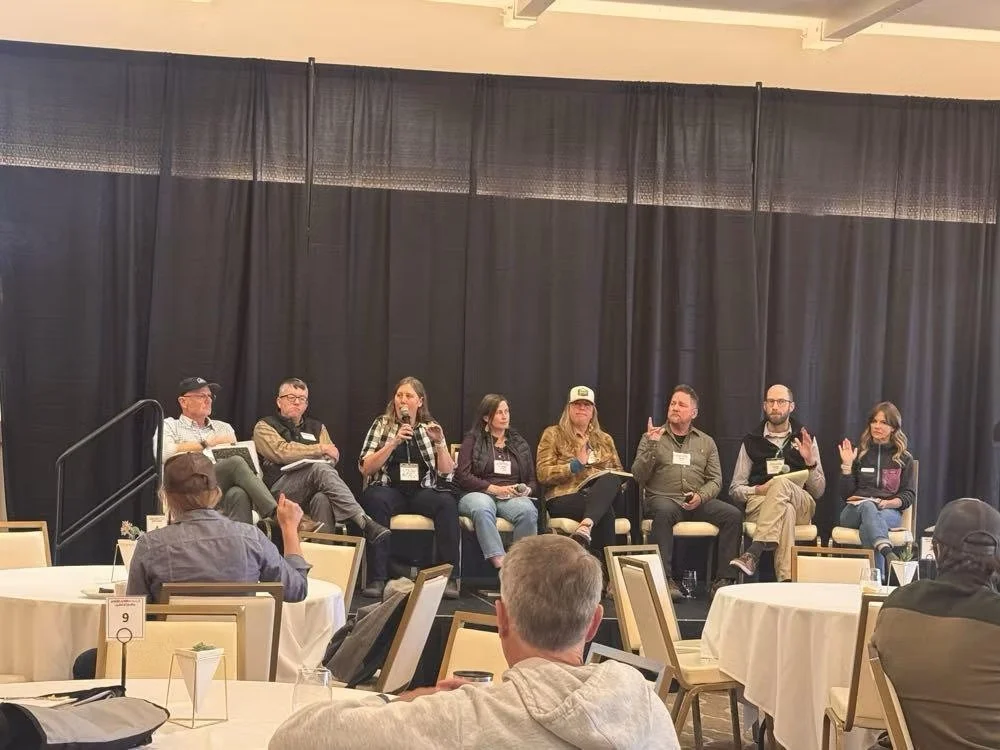
Participants during the Northwest Federal Trails and Public Lands Policy panel
Nicole Brown, Communications and Public Engagement Manager at Outdoor Alliance, attended the summit and joined fellow recreation leaders for a panel discussion focused on how trail, recreation, and conservation organizations are navigating an increasingly challenging landscape. Across the country, land management agencies are facing significant staffing reductions and limited funding. At the same time, recreation participation continues to grow, putting additional pressure on trails, land managers, and local organizations who work to care for these places. These challenges are interconnected, and no single organization can address them alone.
Our panel included representatives from Back Country Horsemen of America (BCHA), Oregon Wild, Oregon Trails Coalition, Friends of the Columbia Gorge, the Pacific Crest Trail Association, Northwest Youth Corps, and Washington Trails Association. We explored how organizations are responding to these challenges through partnerships, resource sharing, and coordinated advocacy. When organizations work together, we are better positioned to coordinate advocacy efforts, hold decision-makers accountable, and advance policy that benefits conservation and recreation access.
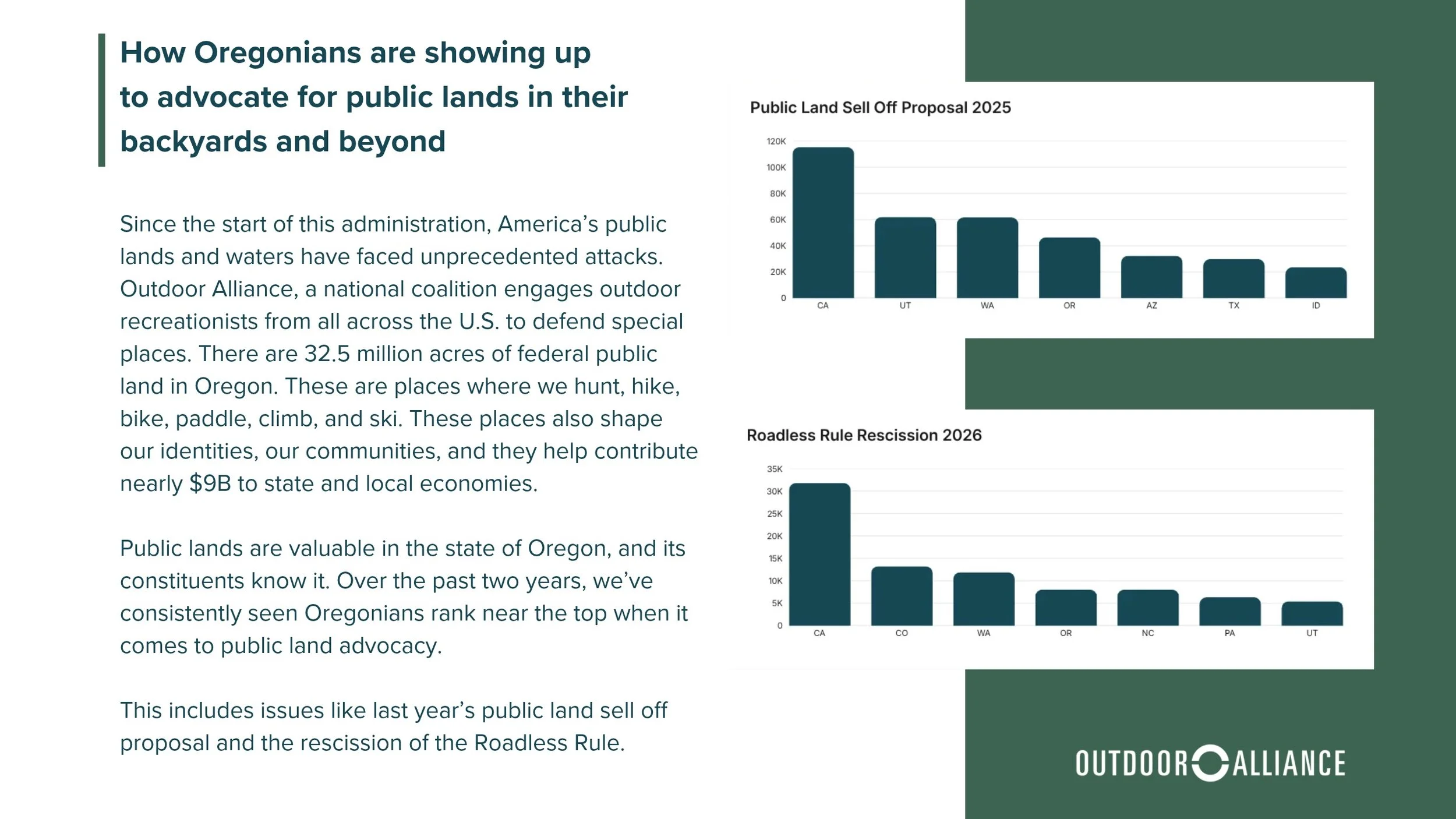
How Oregonians have shown up for public lands 2025-2026
This kind of collaboration is central to Outdoor Alliance's work. By bringing together the human-powered outdoor recreation community, we help connect local organizations and recreation groups with the decision-makers shaping the future of our public lands and waters. We know that a mountain biker maintaining a local trail, a paddler advocating for river access, and a conservation organization working to protect forests and watersheds may approach their work from a different perspective, but we all share an interest in keeping these places preserved and protected for generations to come.
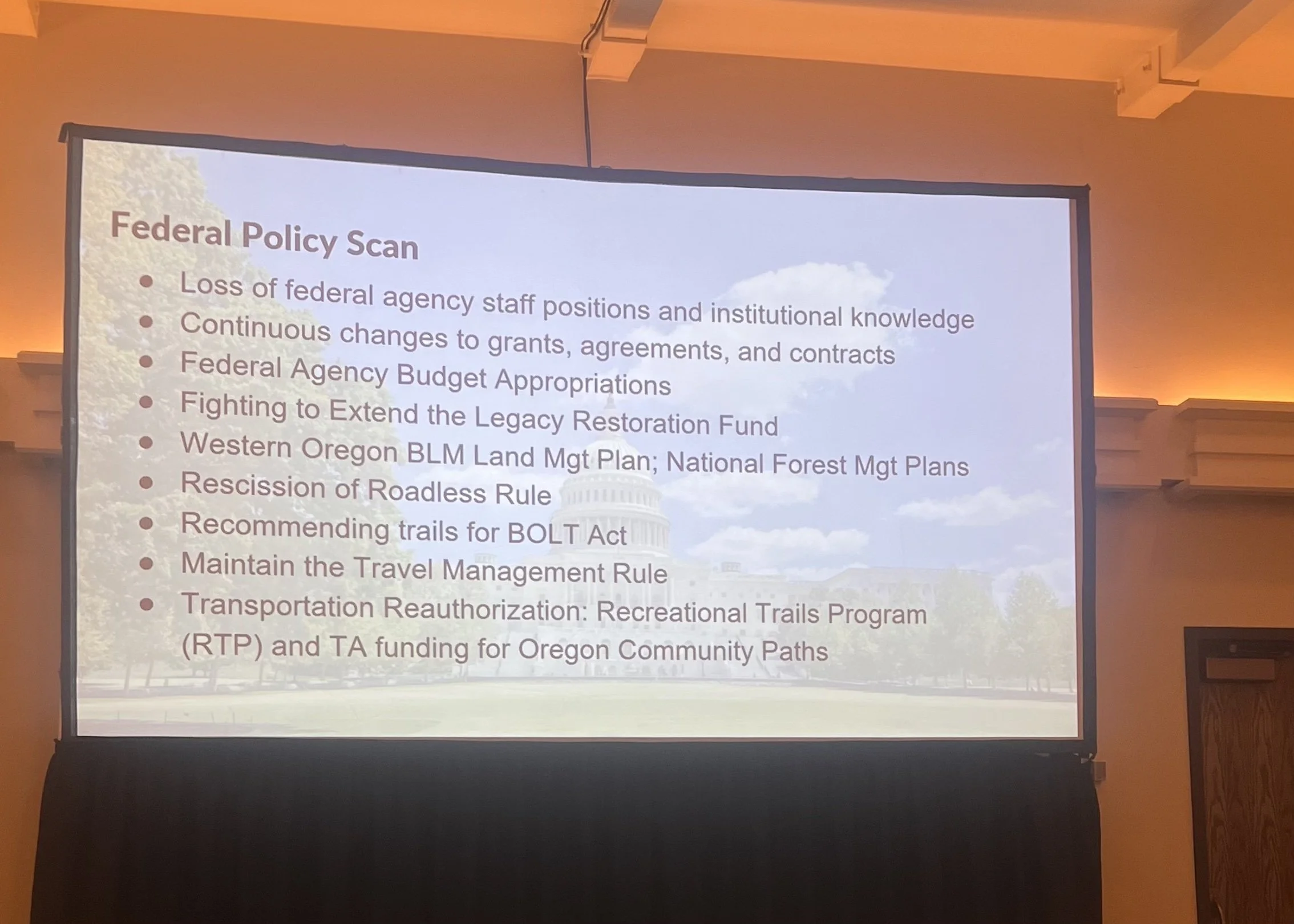
Policy priorities that affect public lands in Oregon
The conversations at the summit reinforced that the decisions made at the federal level have real consequences for the places we love, and the communities we call home. Land managers across federal agencies like the U.S. Forest Service and the Bureau of Land Management (BLM) are essential in maintaining infrastructure and protecting the natural resources that make recreation possible. When agencies lose staff and resources, the impacts are felt by local organizations, volunteers, and gateway communities. That makes it especially important for organizations at both a state and federal level to stay connected, share information, and speak up about the policies and investments needed to keep public lands sustainable and accessible.
Outdoor recreation in Oregon and beyond depends on our willingness to work across organizational boundaries, recognize shared priorities, and build a collective voice for the places we get outside to hike, paddle, ski, bike, and explore. Moving forward, there’s a number of policy issues that affect Oregon as well as the rest of our national public lands, and that we will work closely with partners to address, including the rescission of the Roadless Rule, revision of the Travel Management Rule, and funding for the maintenance backlog at parks and public lands through the Legacy Restoration Fund.
Sign up for Outdoor Alliance action alerts to stay informed about policies affecting the public lands and waters you care about and learn when and how to take action.