Trip Report: Outdoor Alliance Advocates Bring Public Lands Priorities to Washington, D.C.
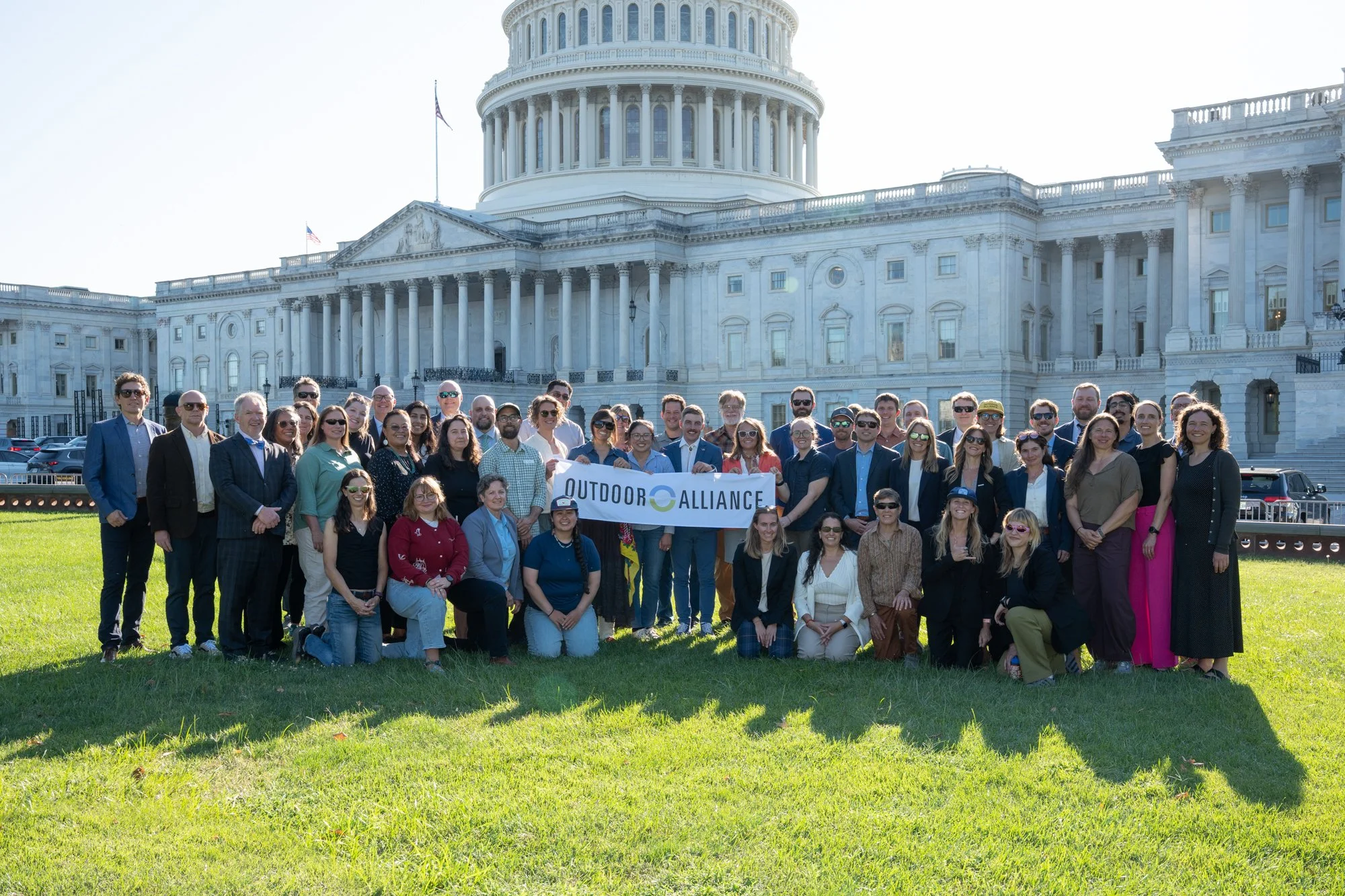
Photo credit: Austin Corbett
In September, Outdoor Alliance brought nearly 60 outdoor recreation advocates from 18 states and territories to Washington D.C. for our annual Fly In. We brought the voices of the outdoor community directly to lawmakers and the administration to advocate for protecting backcountry forests, investing in recreation infrastructure, and keeping public lands public.
Grasstops Collective advocates, Outdoor Alliance Washington, Outdoor Alliance California, and policy professionals from our member organizations all participated in the Fly In. Leaders from recreation organizations, businesses, and communities across the country met with their lawmakers, including Southern Off-Road Bicycle Association (SORBA), Patagonia, Páah Áama Paddle Club, Chugach Mountain Bike Riders in Alaska, CorpsTHAT, Eastern Pennsylvania Alliance of Climbers (EPAC), Bikepacking Roots, Arkansas Climbers Coalition, The Fund for People in Parks, and many more.
Over the course of the week, our advocates participated in nearly 100 meetings with congressional offices and administration officials, including 19 meetings directly with members of Congress. We met with offices representing 21 states, sharing firsthand experiences from the trails, rivers, climbing areas, and backcountry landscapes that our communities know and love.
Our message was clear: public lands matter to people across the country, and the decisions being made in Washington today will shape these places and our experiences on them for generations to come.
60 outdoor recreation advocates
100 meetings with decision makers
19 direct member meetings
21 states represented
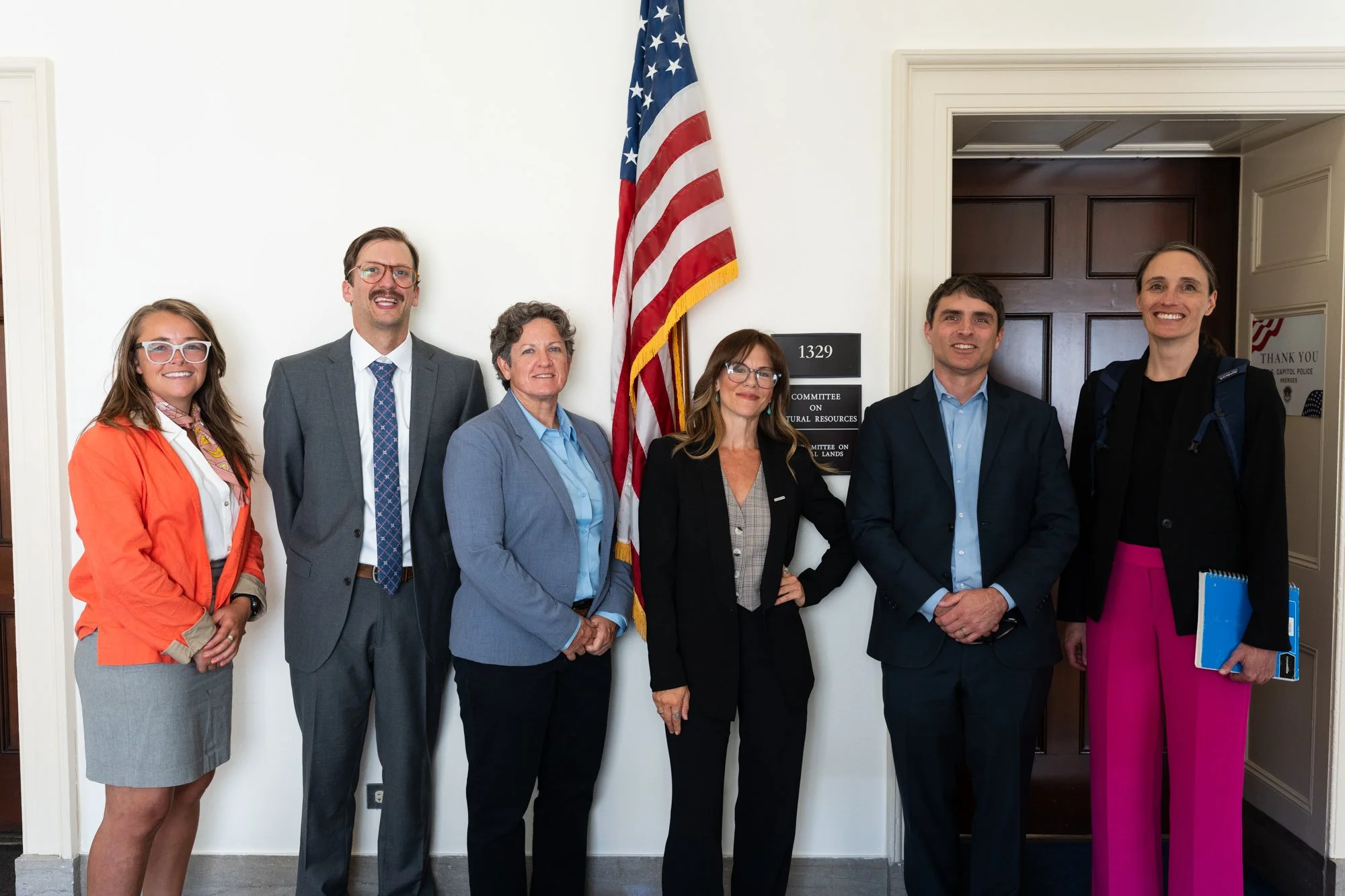
American Whitewater, Outdoor Alliance staff, and cohort 1 members of our Grasstops Collective
Bringing the outdoor recreation community to Capitol Hill
In the last year, the outdoor recreation community has sent more half a million messages to lawmakers about protecting public lands. Our Fly In builds on that momentum, bringing advocates face-to-face with decision-makers to share why these issues matter in their communities and ask what Congress is doing to address them.
Many of this year's participants are members of Outdoor Alliance's Grasstops Collective, a network of local recreation leaders who help connect public lands policy with the people and places affected by it. For most, this was their first time meeting with lawmakers in Washington, D.C.
These advocates bring something especially important to the conversation: firsthand knowledge of the places they recreate and the communities they represent. Whether they're talking about a favorite backcountry ski area, a local mountain bike trail, or the importance of maintaining access to a nearby national forest, they help lawmakers understand how decisions made in Washington affect people on the ground.
Danielle Graham, part of our Grasstops Collective, said, “At the end of our meeting with Representative Smith's staff member, he shared the awe of visiting the Paradise Area at Mount Rainier National Park for the first time. I think these moments highlight our allies in Congress, the strength of the reputation of Outdoor Alliance, and the big "why" for what we are all doing.”
“I met with staff from Senator Curtis’s office and Senator Lee’s office. I knew we didn’t necessarily align on our views around public land use, but I reminded myself that I didn’t need to change anyone’s mind that day. Rather, my main priority was to spend some time with them and share what Utahns, outdoor recreationists, and conservation communities appreciate about our public lands, along with our perspective on how they should be managed. The meetings were enjoyable and respectful, and I left excited to stay in touch and serve as a bridge to Utah’s outdoor recreation and conservation communities going forward,” said Andrew Garcia, Grasstops Collective Cohort 3.
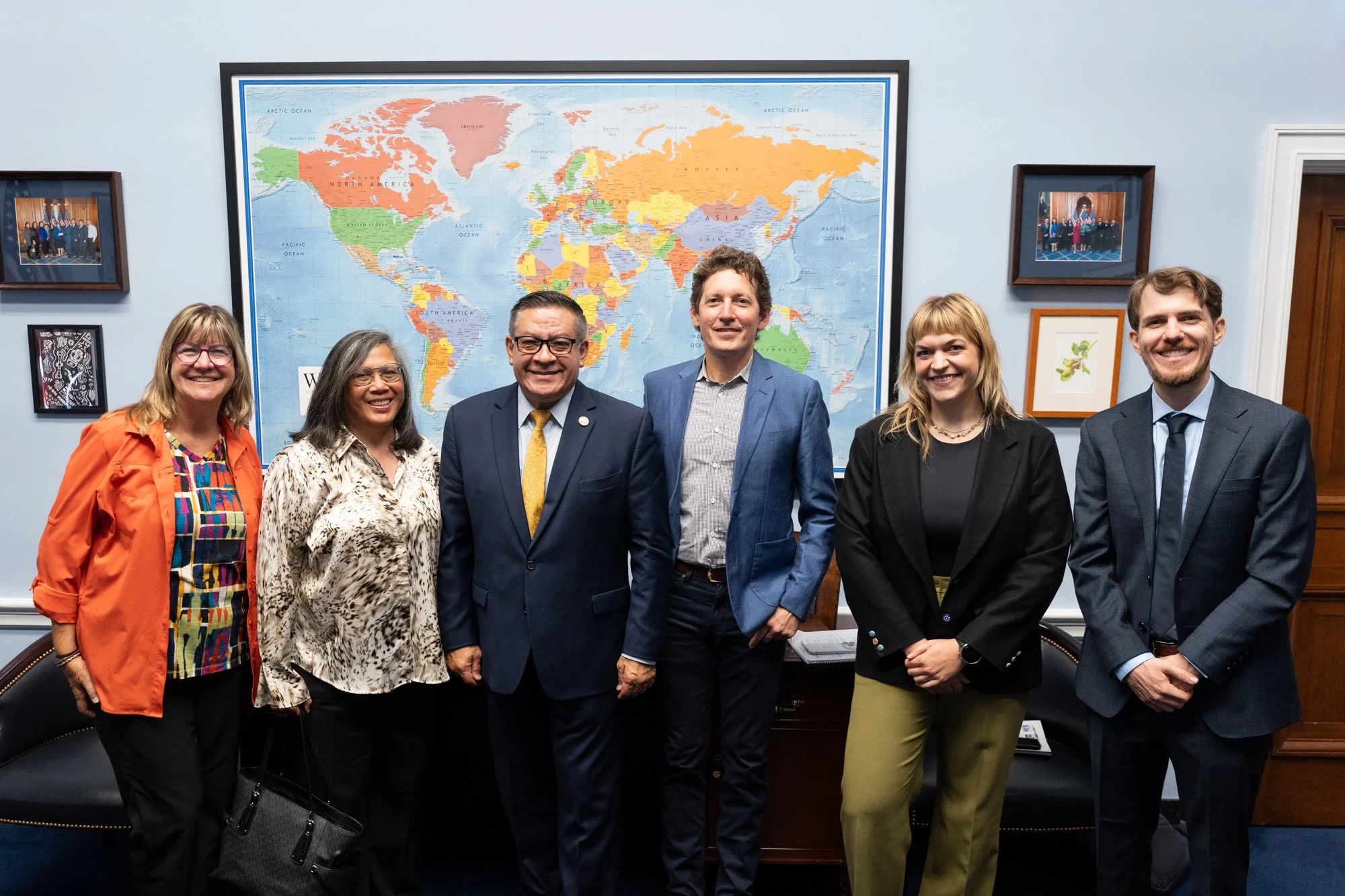
Outdoor Alliance California member meeting with Rep. Carbajal
Our priorities for public lands
This year's Fly In came at a consequential moment for public lands. From proposed changes to longstanding land management policies to the need for sustained investment in trails and recreation infrastructure, our advocates brought a broad set of priorities to Congress and the administration.
Across our meetings, we focused on four interconnected goals: protecting the Roadless Rule, reauthorizing the Legacy Restoration Fund, protecting the Travel Management Rule, and keeping public lands in public hands.
Protecting America's backcountry forests
The administration is proposing to rescind the Roadless Rule, a longstanding policy that protects millions of acres of national forest lands from most new road construction and large-scale logging while allowing a wide range of recreation and active forest management.
Our advocates shared why these protections matter for the backcountry places where they hike, climb, bike, ski, paddle, hunt, and fish. We also discussed how the Roadless Rule has provided a practical balance for more than two decades, protecting the character of these landscapes while allowing local land managers to respond to changing conditions and address specific management needs.
Rescinding the rule would remove an important baseline of protection for backcountry forests, creating new risks for recreation opportunities, clean water, wildlife habitat, and the communities that depend on these places. The public comment period remains open until October 6, and Outdoor Alliance and our partners are working to ensure that the outdoor recreation community's voices are part of the public record.
Investing in the places we love
One of the most encouraging themes from our meetings was the interest in reauthorizing the Legacy Restoration Fund, which was established through the Great American Outdoors Act in 2020.
The fund has helped address the substantial maintenance backlog on public lands, supporting projects that repair trails, restore campgrounds, improve visitor facilities, and maintain the infrastructure that makes outdoor recreation possible.
With the fund's authorization having expired, Congress has an opportunity to renew this investment and ensure that land management agencies can continue addressing critical maintenance needs.
During our Fly In, advocates discussed the importance of reauthorization with both Republican and Democratic congressional offices. Several lawmakers also encouraged us to continue engaging our communities and congressional committee staff to help move legislation forward before the end of the year.
With a crowded congressional calendar and limited working days remaining, the path forward is uncertain. But our meetings demonstrated that there is continued interest across party lines in maintaining the infrastructure that supports public lands and outdoor recreation.
Supporting balanced recreation management
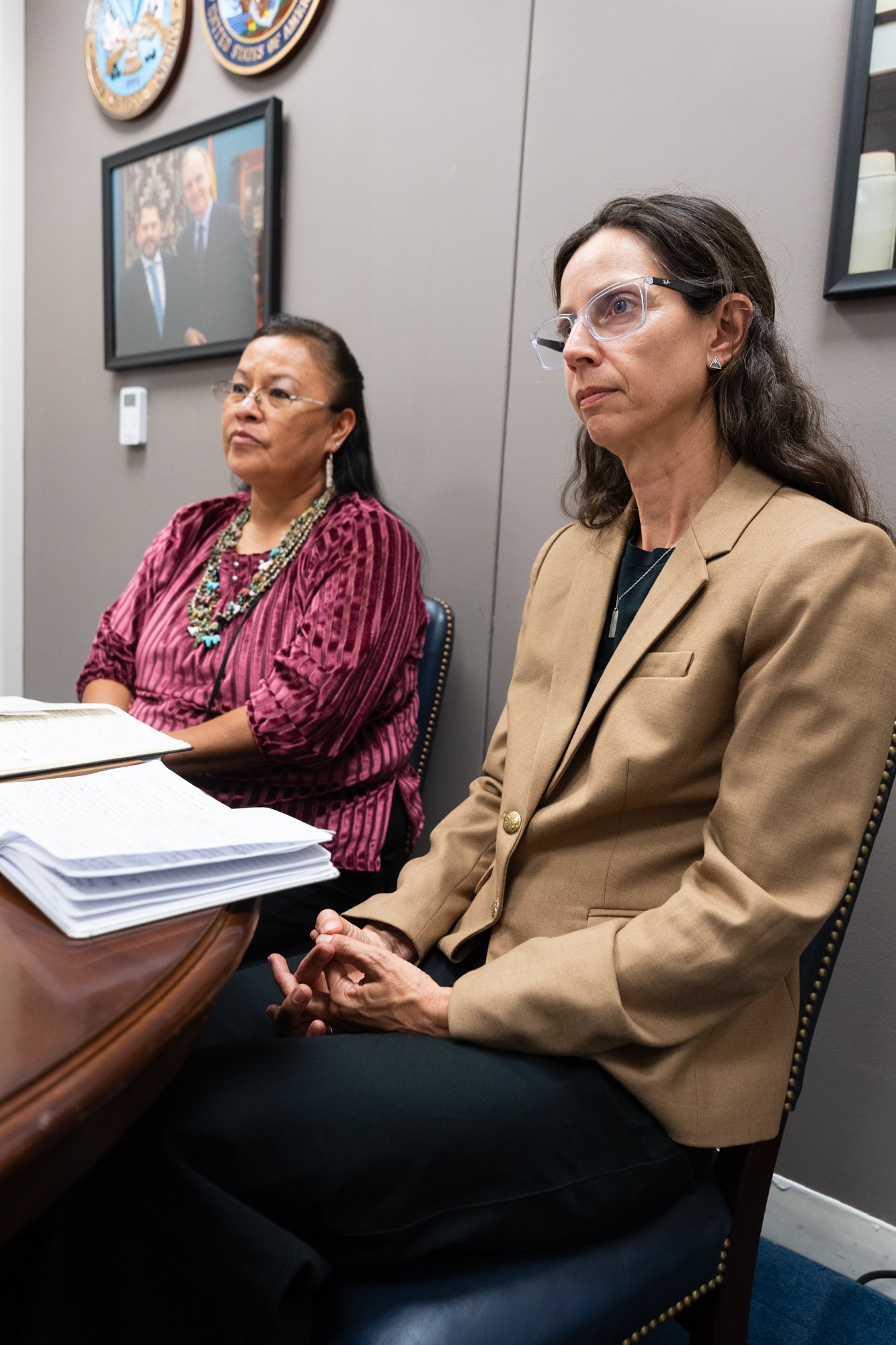
Outdoor Alliance Grasstops Collective Cohort 3 members meeting with legislators from Arizona
Another major priority was the Forest Service's proposed revision of the Travel Management Rule, which helps land managers determine where motorized recreation is permitted on national forests.
The existing framework helps the Forest Service designate appropriate roads, trails, and areas for motorized use while considering environmental impacts, public safety, and potential conflicts among different types of recreation. The USDA has proposed changing the Travel Management Rule, shifting toward a presumption that roads, trails, and areas are open to motorized use unless specifically designated as closed.
Our coalition brings together people who recreate in many different ways, from mountain biking and trail running to backcountry skiing, climbing, and paddling. During meetings with congressional offices and administration officials, advocates shared how travel management decisions affect their local recreation experiences and why thoughtful planning is important for maintaining access and managing potential conflicts.
As visitation and demand for outdoor recreation continue to grow, land managers need effective tools to balance different uses and protect the natural resources and recreation experiences that bring people to these places.
Outdoor Alliance and our partners asked members of Congress to sign a letter to the USDA asking them to support effective travel management and ensure that the recreation community's perspectives are considered as the Forest Service evaluates potential changes.
21 members of Congress have signed onto the letter so far, 10 of whom we directly asked to join while we were in Washington D.C.
Keeping public lands in public hands
Last year, the outdoor recreation community came together to oppose proposals to sell off large areas of public land. Congress ultimately removed those proposals from the final reconciliation legislation, demonstrating the impact of people across the country speaking up for the places they love.
But the future of public lands remains an important issue in Washington. During our Fly In, advocates asked lawmakers to maintain public ownership of these landscapes and support policies that keep them healthy, accessible, and well-managed.
From backcountry forests to local trails and river access, public lands support experiences that are difficult to replace. They also sustain local businesses, provide clean water and wildlife habitat, and give future generations the opportunity to develop their own connections to the outdoors.
Our meetings reinforced that keeping public lands public is about more than opposing land sales. It also means maintaining the protections, funding, and agency capacity needed to care for these places over the long term.
What comes next?
Our Fly In is an important part of Outdoor Alliance's advocacy, but the work doesn't end when our advocates leave Washington.
Congress faces a crowded agenda between now and the end of the year, and it remains uncertain which public lands priorities will advance before the current Congress concludes. In the coming weeks, we'll continue working with congressional offices, coalition partners, and recreation advocates to build on the conversations we started during our Fly In.
That includes working toward reauthorization of the Legacy Restoration Fund, engaging with the Forest Service on proposed changes to travel management, and continuing to defend the Roadless Rule.
It also means keeping our communities involved. When lawmakers hear directly from the people who use and care about public lands, they gain a clearer understanding of how federal policy affects their constituents and the places that matter to them.
“As a veteran, being able to share the perspective of someone who spent 22 years serving this country and now sees public lands as something worth continuing to serve and protect made the experience especially meaningful. Perhaps the biggest takeaway for me was realizing that advocacy is ultimately about relationships. It is about showing up, telling your story, listening to others, finding common ground, and building trust over time. I walked away from Washington with a much better understanding of the process, but more importantly, with new relationships and a greater appreciation for the responsibility we have to stay engaged beyond a single visit to Capitol Hill,” said Erick Burgos, Trailhead Strategies Group, Grasstops Collective Cohort 3.
We're grateful to every advocate who traveled to Washington, D.C., every coalition partner who helped make this year's Fly In possible, and everyone who has written a letter, submitted a comment, or spoken up for public lands over the past year.
Together, these efforts help ensure that the outdoor recreation community has a voice in the decisions shaping the future of our public lands and waters.