Wildfire Season is Here: What Outdoor Recreationists Need to Know
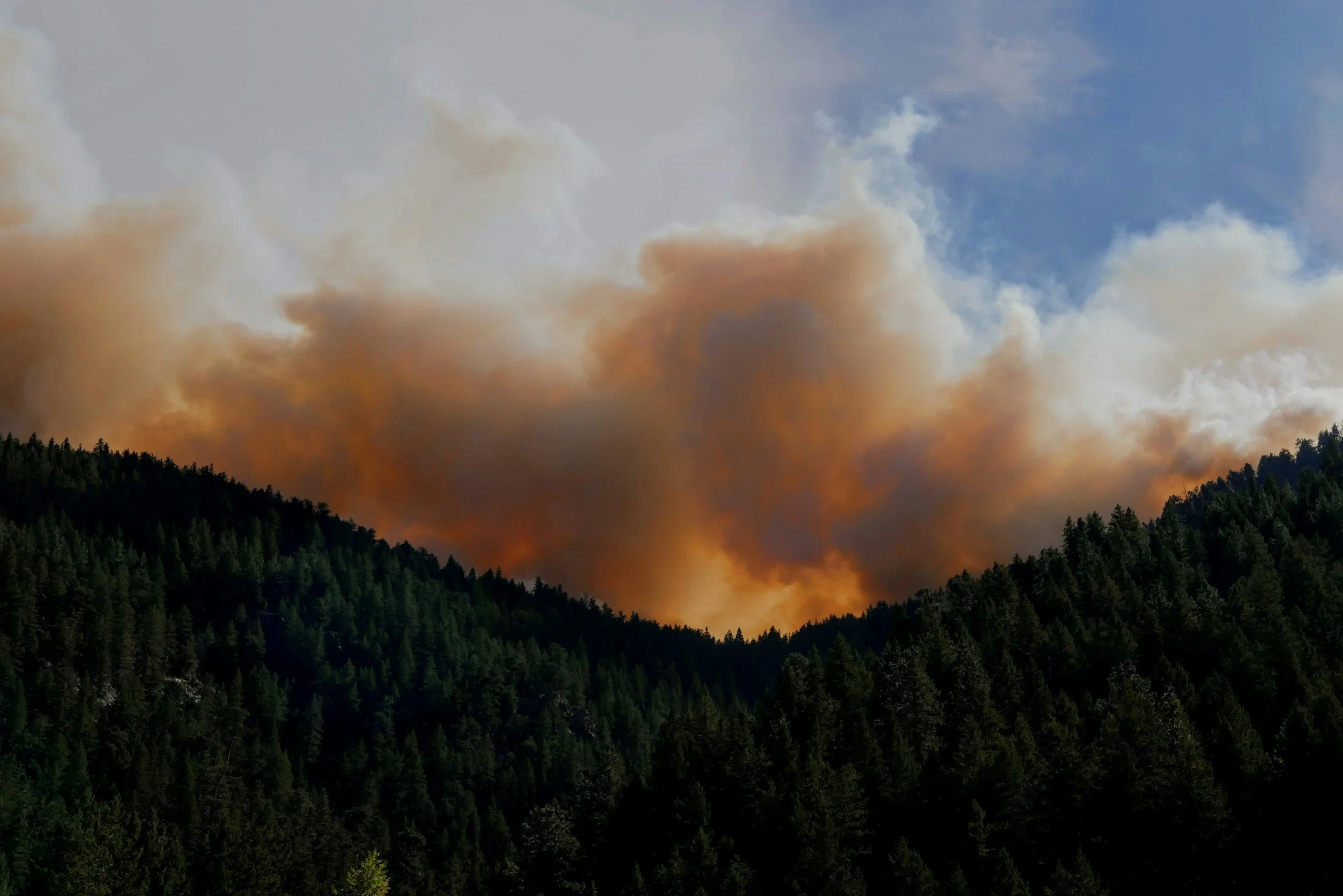
Wildfire season has arrived, and already this summer we've seen devastating fires, dangerous smoke, and tragic losses.
Across North America, major fires have already affected Colorado, Oregon, Utah, central Oregon, and the Bears Ears region. Smoke from large fires burning in Ontario and northern Minnesota has also drifted across the Midwest and Northeast, causing dangerously high AQI levels and reminding millions of Americans that wildfire is not just a Western issue. Wildfire increasingly affects communities, public health, and outdoor recreation across the country.
On June 28, three wildland firefighters—Emily Barker, Nick Hutcherson, and Sydney Watson—were killed while responding to the Knowles Fire in western Colorado, a reminder of the risks firefighters take to protect communities and public lands. The fire has since merged into what is now known as the Snyder Fire. For those wishing to help, the Garfield County Emergency Operations Center has shared memorial donation information to support the families and the wildland fire community.
Stay Safe: Wildfire Resources for Outdoor Recreation
Increasingly, outdoor recreationists need resources to monitor ongoing fires as well as air quality from smoke. Resources for smoke include the EPA’s AirNow website and Fire and Smoke Map as well as Purple Air’s Real-Time Air Quality Map. Even if a fire is hundreds of miles away, smoke can create hazardous conditions. If air quality reaches unhealthy levels, consider postponing strenuous outdoor activities or choosing a location with cleaner air.
To track ongoing fires, Inciweb tracks ongoing federal fires and fire conditions, as does American Whitewater’s fire map below. Before heading out, check current fire activity, air quality, and any local closures.
A Challenging Fire Season with Big Changes at Public Land Agencies
This year's fire season is unfolding during one of the biggest periods of change for the federal agencies responsible for managing wildfires.
Following another dry winter in many parts of the West and forecasts calling for above-normal fire potential through much of the summer, federal agencies have adopted an aggressive full suppression strategy, prioritizing rapid response to every new wildfire. Given current conditions, this approach is understandable and reflects the immediate need to protect lives, communities, and infrastructure.
At the same time, wildfire experts have long recognized that suppression alone cannot solve America's wildfire crisis. Over the long term, forests and other fire-adapted landscapes need carefully managed prescribed fire, strategic fuels reduction, and opportunities to restore natural fire where it can be safely and ecologically appropriate. We went deep on this issue in our 2023 wildfire policy paper and continue to advocate for policy changes and practices that build long term resilience to wildfire across our public lands and communities.
Charles Evans, a wildland firefighter with SHARC Backcountry Management, said, “Something I wish more people understood is that wildland firefighting is not seasonal—it is a year-round responsibility, and we need to support the boots on the ground. Suppression is only one part of the job. The work that happens before the smoke—fuel reduction, prescribed fire, and maintaining and improving roads and trails—is essential.
Across much of the country, overstocked forests and accumulated fuels are making fires more difficult to manage. We also need to maintain access to our forests. When access is lost, wildfire response becomes slower, more dangerous, and more expensive. It delays restoration, limits our ability to respond safely, and ultimately affects our communities, wildlife, and the clean air and water we all depend on.
Healthy forests don’t happen by accident. They depend on year-round work and active, thoughtful management of our fuels.”
This season also comes amid significant changes to the agencies that manage wildfire.
The Department of the Interior recently launched its new Wildland Fire Service, consolidating all Interior fire programs into a single agency. The Administration has also proposed transferring the Forest Service’s wildfire fire program (currently the largest federal fire agency) to the new Wildland Fire Service, which could fundamentally reshape the agency, whose fire program supports much of the staffing, infrastructure, and expertise that also benefit recreation, stewardship, and land management across national forests.
Meanwhile, the Forest Service has undergone major organizational changes, including staffing reductions and the loss of many employees who support wildfire response through "red card" qualifications. Although the agency successfully met its firefighter recruitment goals this year, hazardous fuels treatments and prescribed fire work declined in 2025, limiting opportunities to reduce wildfire risk before fire season begins.
Current Opportunities to Improve Wildfire Policy
Wildfire policy continues to see meaningful bipartisan collaboration in Congress, and the 2026 fire season is likely to increase the urgency of passing meaningful wildfire reforms.
Outdoor Alliance is supporting legislation to strengthen prescribed fire programs, support the wildland fire workforce, improve smoke preparedness, expand Tribal-led forest management, and help communities become more resilient to wildfire::
National Prescribed Fire Act of 2025 (S. 2015/H.R. 3889)
Fire Information and Reaction Enhancement (FIRE) Act of 2025 (H.R. 753)
The Facilitating Increased Resilience, Environmental Weatherization And Lowered Liability (FIREWALL) Act (S. 1323)
Tribal Self-Determination and Co-Management in Forestry Act (H.R. 3444)
Tim's Act (S. 279/H.R. 743)
Wildfire Smoke Relief Act (H.R. 5481)
Modernizing Wildfire Safety and Prevention Act of 2025 (H.R.1923)
Wildfire Emissions Prevention Act (S.3044)
Western Wildfire Support Act of 2025 (S. 91/H.R. 5782)
In addition to these bills, Congress is also considering a broader wildfire package called the Fix Our Forests Act (FOFA). Outdoor Alliance supports this bill's emphasis on improving forest resilience, accelerating restoration projects, expanding prescribed fire, and investing in wildfire preparedness. At the same time, we've raised concerns about provisions that would weaken environmental review and public engagement for some projects. We are also concerned that FOFA, which does not include any new funding for wildfire mitigation, is being advanced alongside cuts to staff and funding at land management agencies, making it unclear whether the new initiatives and programs authorized in the bill will meaningfully increase wildfire resilience.
As lawmakers continue negotiating wildfire legislation, Outdoor Alliance will advocate for policies that reduce wildfire risk while protecting recreation opportunities, healthy forests, and the outdoor experiences that millions of Americans value.
Take Action
Extreme wildfire is becoming a defining challenge for outdoor recreation. Addressing it will require better forest management, stronger public land agencies, investments in restoration, and policies grounded in science and long-term resilience.
Outdoor recreationists have an important role to play and you can help by writing to your members of Congress about legislation to help address the risk of megafires.