Federal Agencies Release Improved Guidance for Wilderness Climbing
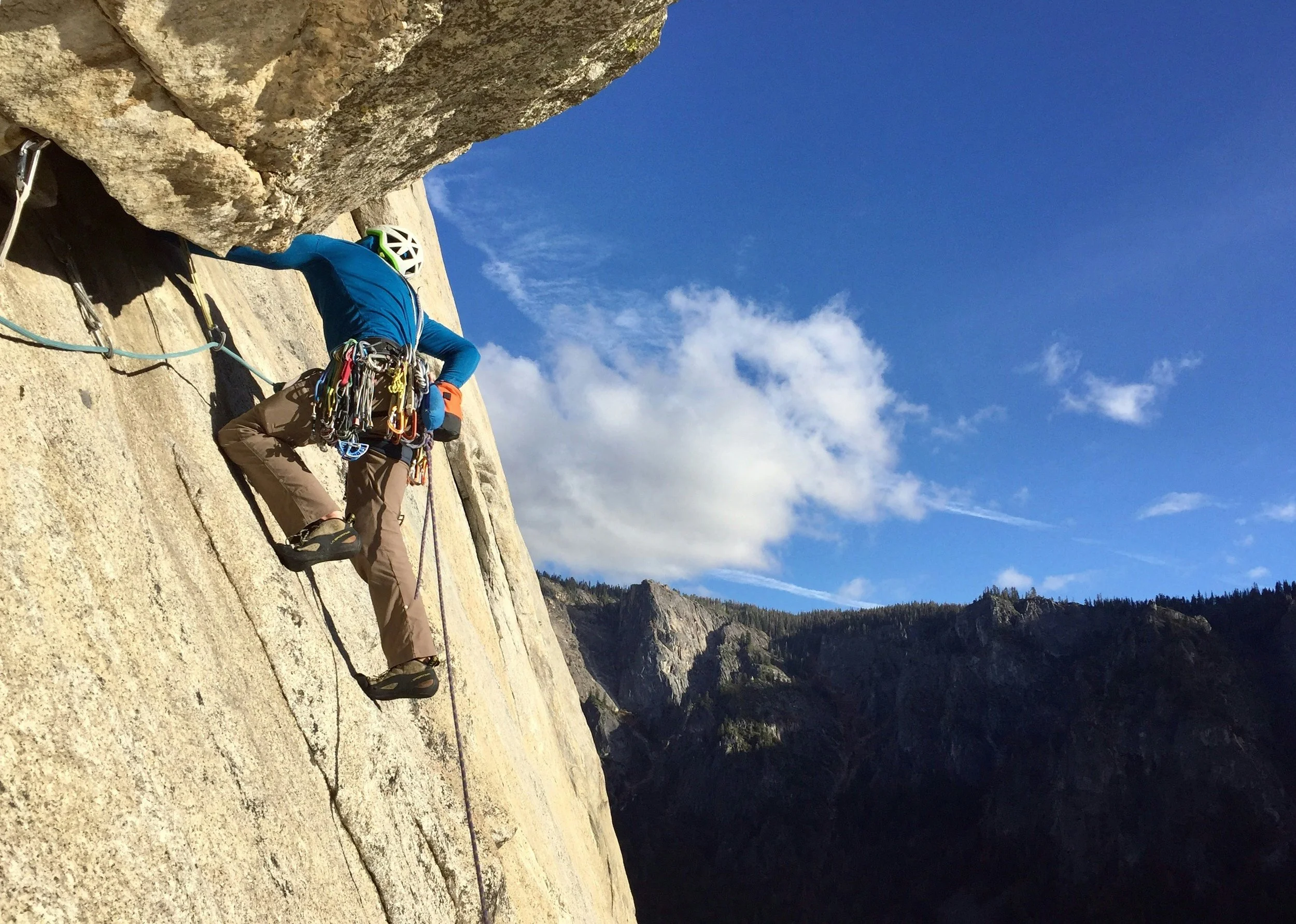
Photo credit: Billy Onjea, climbing in Yosemite
Four federal land management agencies recently released new policy guidance aimed at modernizing how they manage climbing and mountaineering in Wilderness areas. The new climbing guidance—a requirement of the EXPLORE Act, signed by President Biden—is a significant and positive step forward that provides climbers and other recreationists with certainty that they can continue to safely enjoy the thousands of climbing routes found across the National Wilderness Preservation System, which includes iconic climbing destinations like Yosemite’s El Capitan, the Diamond on Long’s Peak, the North Cascades, Linville Gorge, the Wind River Range, and more.
The release of updated climbing guidance marks important progress for the climbing community, which has worked for decades to secure a fair and workable policy that maintains climbing access while sustaining important Wilderness values that climbers and other recreationists value deeply.
The climbing guidance itself primarily addresses the use and placement of fixed anchors in Wilderness areas. Fixed anchors, which include bolts, slings, and pitons, are essential parts of climbing safety systems that allow for the safe ascent and descent from climbs. Despite their importance for climbing (a historic and popular form of Wilderness recreation) federal agencies have never had a consistent policy governing the placement and replacement of fixed anchors in Wilderness areas, which has caused confusion and created uncertainty for climbers and land managers alike. The guidance provides a consistent framework for protecting Wilderness character while supporting climbing access: it promotes a clean climbing ethic, allows for fixed anchors where critical for climber safety, and preserves land managers' discretion to make site-specific management decisions.
In 2023, the National Park Service and the Forest Service proposed policies that, for the first time, categorized fixed anchors as “installations” prohibited under Section 4(c) of the Wilderness Act. The 2023 guidance created a complex permitting process for individual anchor placements and replacements that would have greatly limited new route development and slowed or even prohibited climbers from replacing aging unsafe anchors on existing routes. The proposal created legal uncertainty about the future of thousands of longstanding climbing routes and would have hindered a historic form of Wilderness recreation. Outdoor Alliance worked closely with our member organizations that represent climbers including Access Fund, American Alpine Club, and The Mountaineers, to communicate our concerns with the 2023 guidance. We also worked to address these concerns through the EXPLORE Act, which passed Congress unanimously in 2024 and provided clarity for how agencies should treat climbing in Wilderness.
The 2026 draft guidance is a significant improvement that protects both climbing access and Wilderness character. Though specific policies differ between four different agencies, each policy shares some important characteristics. As required by the EXPLORE Act, all agencies recognize climbing, including the use and maintenance of fixed anchors, as an appropriate use in Wilderness. Bolt-intensive sport climbs, as well as the use of power drills, remain prohibited in Wilderness areas. Climbers may continue to use and maintain routes established before January 4, 2025 (when the EXPLORE Act was signed into law), and the placement of new anchors is expressly not prohibited (though agency policies vary regarding where and how new anchors may require a permit).
While Access Fund, American Alpine Club, and Outdoor Alliance will likely share some technical concerns about the draft guidance, overall it is positive to see the agencies following through on the EXPLORE Act.
To comment on the draft guidance and for a deeper dive on how the new policies will affect climbing, including important technical improvements, see these current updates from Access Fund and American American Alpine Club.
In announcing the climbing guidance, the Department of Interior also announced that they are seeking input on potential updates to their broader Wilderness management policies at multiple agencies, including how agencies manage Wilderness areas and identify Wilderness-quality lands. This initiative is entirely separate from the climbing guidance. Outdoor Alliance will share our perspectives on the broader Wilderness policy updates in the near future, but we are concerned that this is occurring in the context of multiple federal initiatives to weaken or repeal federal conservation protections.