Outdoor Allies: Anneka Williams
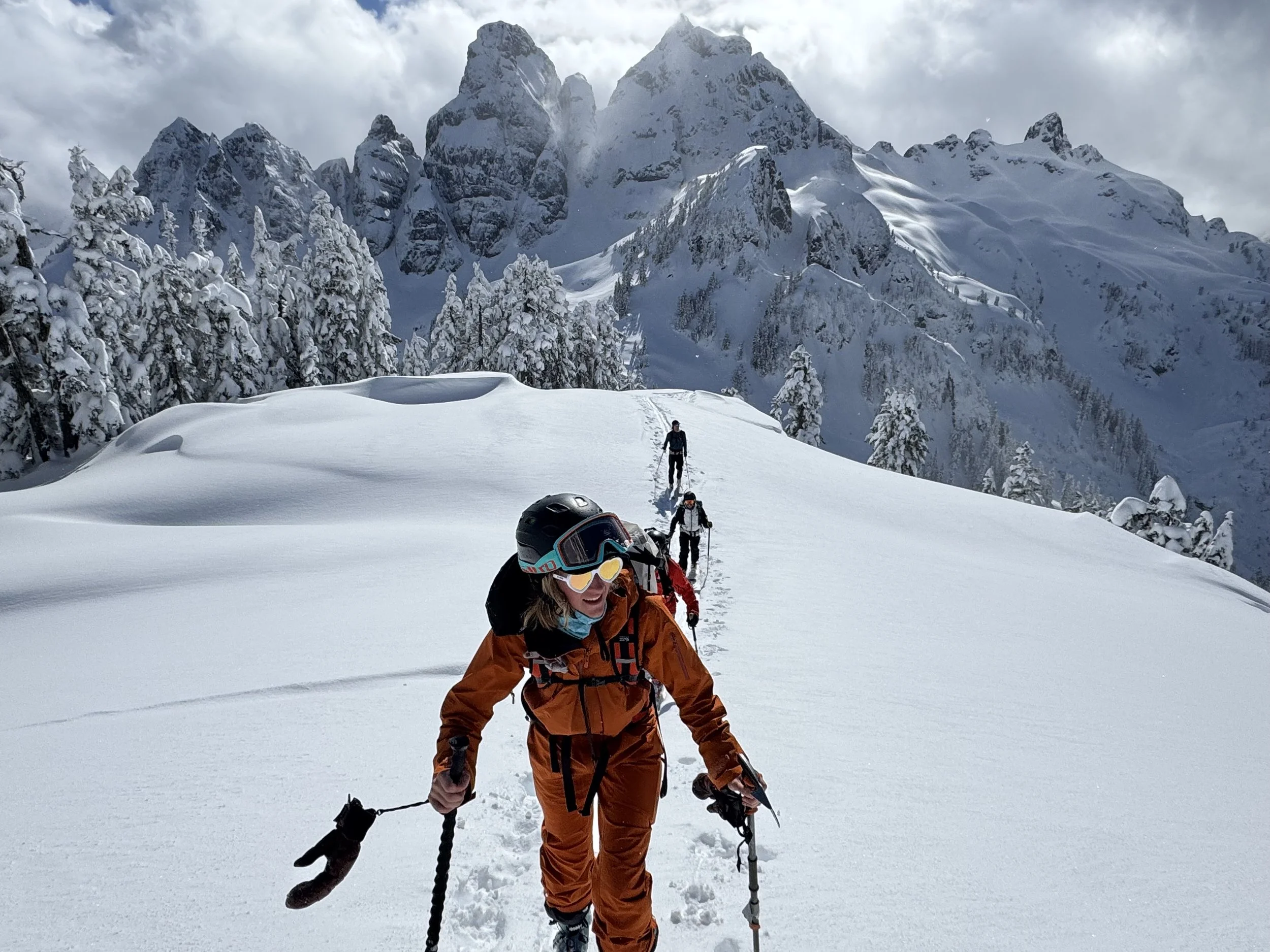
Anneka Williams in the mountains near Squamish, B.C.
Ever wondered how you can do more for public lands but you aren’t sure where to start? Outdoor Alliance’s Outdoor Allies series explores how other outdoor adventurers got their start in advocacy work and their advice for how you can harness your passion for the outdoors into advocacy for the land and water you love. Anneka Williams is the Policy Director for Winter Wildlands Alliance, one of ten member organizations at Outdoor Alliance. A climate scientist and writer, Anneka has pursued research, stories, and ski lines in farflung places across four continents. She is currently based in Salt Lake City, Utah and frequents the Wasatch range.
What do you like to do outside and how did you first get connected with the outdoors?
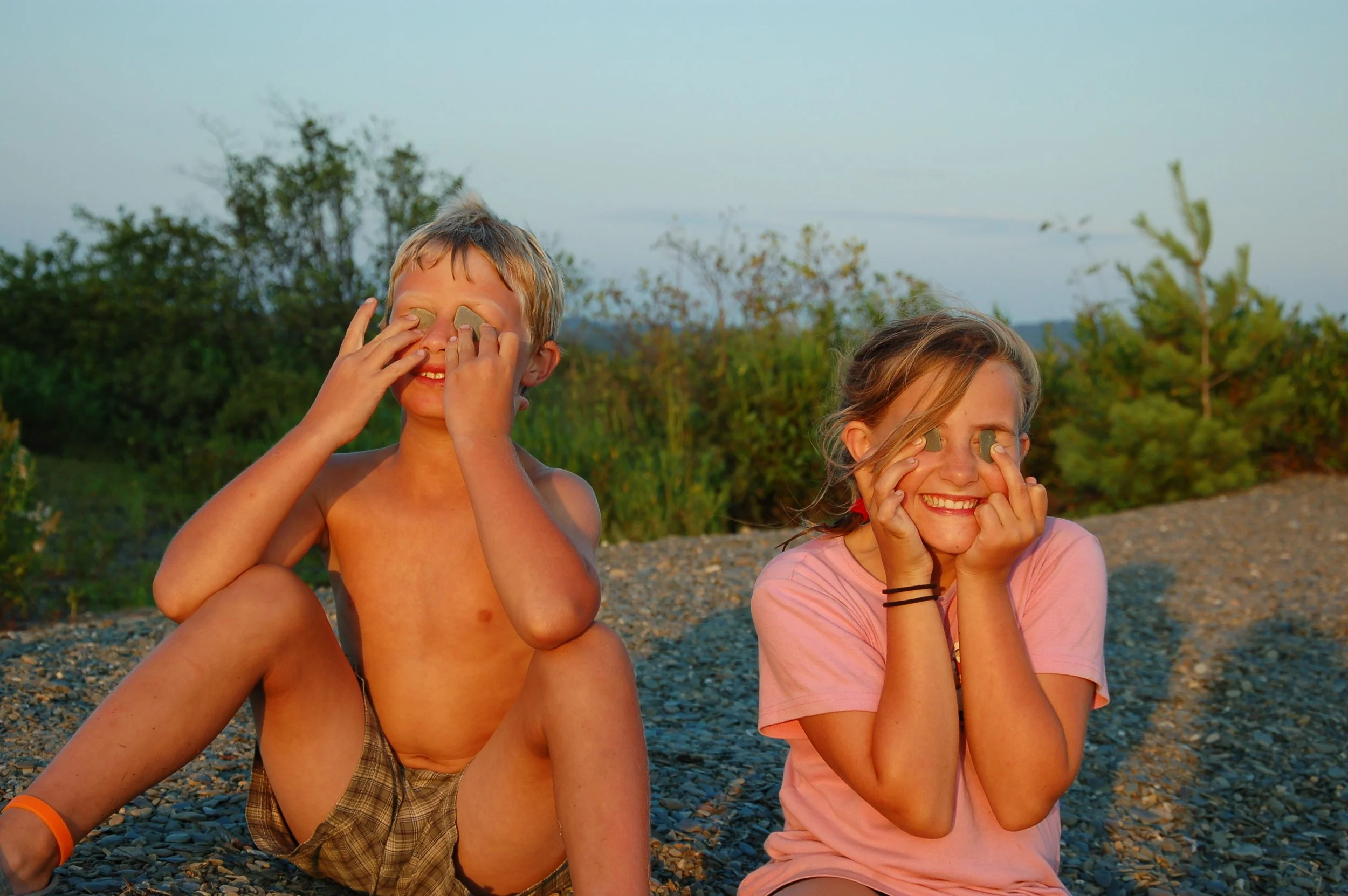
Anneka, alongside her brother
I grew up in the heart of Vermont’s Green Mountains where being outside was just a way of life, and an integral part of my home community. In the summer my family spent a lot of time exploring the woods behind our house, hiking local trails, and going on canoe paddling trips all over New England. In the winter, skiing was the best way to survive Vermont’s frigid temperatures and snow, and I loved ripping glade laps at Mad River Glen or Nordic skiing with my parents. My family also co-owned a yak farm and I spent a lot of time rambling around the fields, moving hay, and learning to appreciate the subtle shifts in seasons and how that changed our chores around the farm.
As I’ve gotten older, spending time outside, whether it's in a public park or remote wilderness, continues to be a touchstone for me and my values. In my free time, you can usually find me skiing, trail running, biking, or plotting my next big mountain adventure.
You’re new to your role as policy director at Winter Wildlands Alliance, one of our nine member orgs. Can you tell us more about your journey into advocacy, and how it led to your current role?
My background is in climate science and specifically how climate change affects high altitudes and high latitudes. When the Trump administration took office, my work was really curtailed by the administration’s crackdown on anything and everything related to addressing climate change. I felt I needed to pivot in order to keep having an impact and was psyched to be able to join the Winter Wildlands Alliance team where we are working to protect wild snowscapes.
Given your background in climate, what’s different about working at a recreation organization, and what’s unique about the work that Winter Wildlands Alliance does?
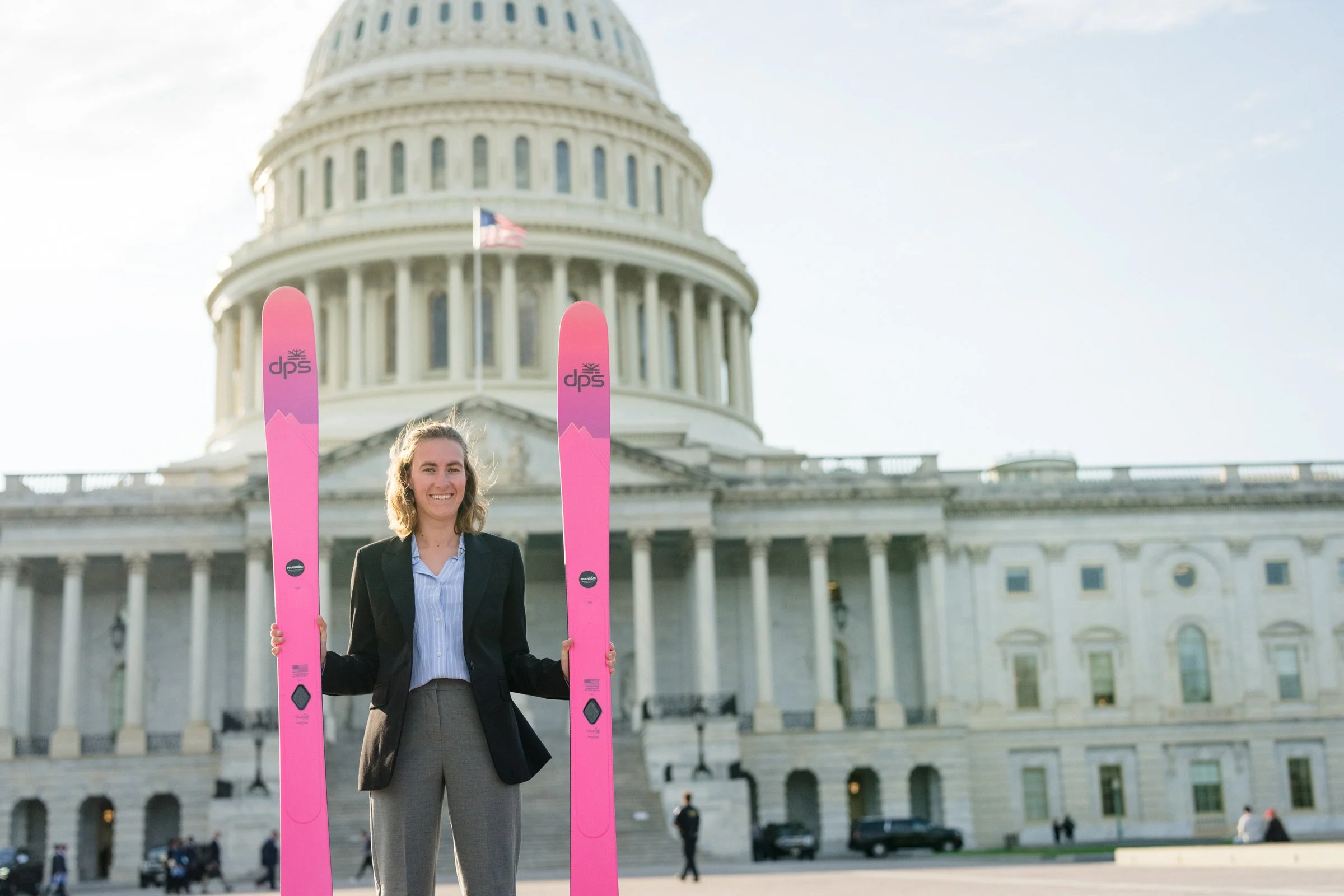
Image from Kevin Lowery
Winter Wildlands Alliance and the other Outdoor Alliance member organizations are such leaders in public lands and recreation policy and as I’ve gotten more settled in my role, I'm really amazed by the coalition’s multi-decade track record of working on the ground with local communities. Over the years, Winter Wildlands Alliance has helped write thousands of comment letters for smaller organizations and individuals all over the country advocating for human-powered winter recreation along with maintaining relationships with agency staff, advocating in D.C., and proactively working to protect wild snowscapes. It’s been an exciting transition for me to dive into this work and it’s clear that folks within Outdoor Alliance are backing up what they’re saying with action and intention and I really value that.
What are the big advocacy issues that Winter Wildlands is currently working on?
In both my role as Winter Wildlands Alliance Policy Director and personally, I spend a lot of time thinking about how to more effectively articulate and communicate different environmental and climatic issues in order to engage more people.
One specific issue that Winter Wildlands Alliance does a lot of work on is advocacy around travel management, which is essentially a zoning process where the Forest Service designates some areas for non-motorized use and other areas for motorized use. The goal of travel management is to balance different uses to protect ecological integrity within our national forests. When you dive into the actual Travel Management Rule, it gets wonky pretty fast. It’s a good example of an advocacy issue that really depends on strong communication in order to engage supporters. I am constantly working with our Communications Director to brainstorm new ways we can clearly and compellingly explain the importance of travel management to a broad audience.
Many in the outdoor community are already feeling the effects from a lack of snow this past winter. What does a low snow year mean for our rivers, and how does that affect other types of recreation pursuits?
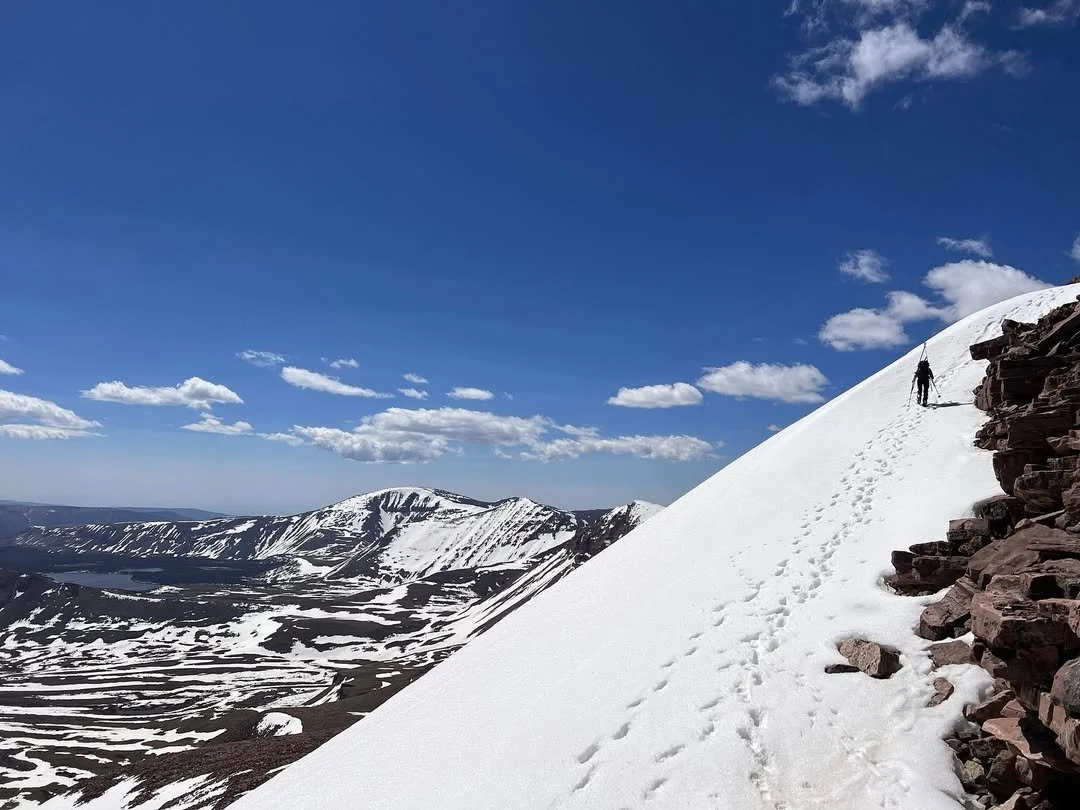
Anneka in the High Uintas
We had a really lackluster winter across much of the West with low snow totals and erratic snowfall. The West relies on snowpack for year-round water resources. When we don't have adequate snowfall that aligns with historical averages, that creates a lot of consequences downstream (learn more here) and I think we’re already feeling the squeeze of that coming out of this winter.
As we head into summer, many boaters, whitewater kayakers, paddlers, and rafting outfitters are going to experience streams and rivers that are much lower than what they’re used to. If you’re backpacking, you're really going to have to be mindful of where you’ll get your water while you’re on trail. If you're used to getting it from a stream in the mountains, do some research on where you’re going and what the snowpack has been like this past year. Look into recent reports and call the ranger station ahead of time. Folks closest to the recreation resource will likely have the best and most accurate reports. Water this summer is definitely not going to be guaranteed and I think that over the coming months it’s going to be evident, especially in the Western U.S., that we have a water supply problem. And this often starts with our snowpack and brings me back to the importance of the work Winter Wildlands Alliance is doing to protect wild snowscapes.
Access to our favorite places is so important, whether it be a backcountry ski run, climbing route, or our favorite trail. How can outdoor recreationists continue to advocate for access to these places, while also considering the effects of climate change?
Outdoor recreationists are on the front lines of climate change in the sense that we all have really intimate knowledge of the places we like to go to do our favorite activities. We're acutely aware when those places are different from what we would consider normal at different times of year. I think it's really important to go beyond just noticing and complaining about it. The “why” is an important question to be asking, and the answer should lead to some type of action.
It’s also important to recognize that climate change doesn’t know geography nor does it respect boundaries. The choices that people make each day have implications for the rest of the world and we all have a part to play in working to mitigate climate change even as we simultaneously have to figure out how to adapt to the changes that are already happening and will continue to come. Getting involved close to home is a great first step and I think involves noticing what’s happening in your area, documenting changes you’re seeing, and then using that awareness to advocate for action. This action is often centered around your local community making better choices for the climate and supporting the people in your community most affected by its impacts. I think starting at this local scale is really important. As humans, we are much better at operating from a place of love than a place of hate, so holding on to what you love and having that drive your advocacy is much more sustainable than being fueled by anger or despair.
A love of place is definitely something that drives the outdoor recreation community. Whether you’re a hiker, hunter, climber, or backcountry skier, how can we put our differences aside in order to advocate towards a similar goal?
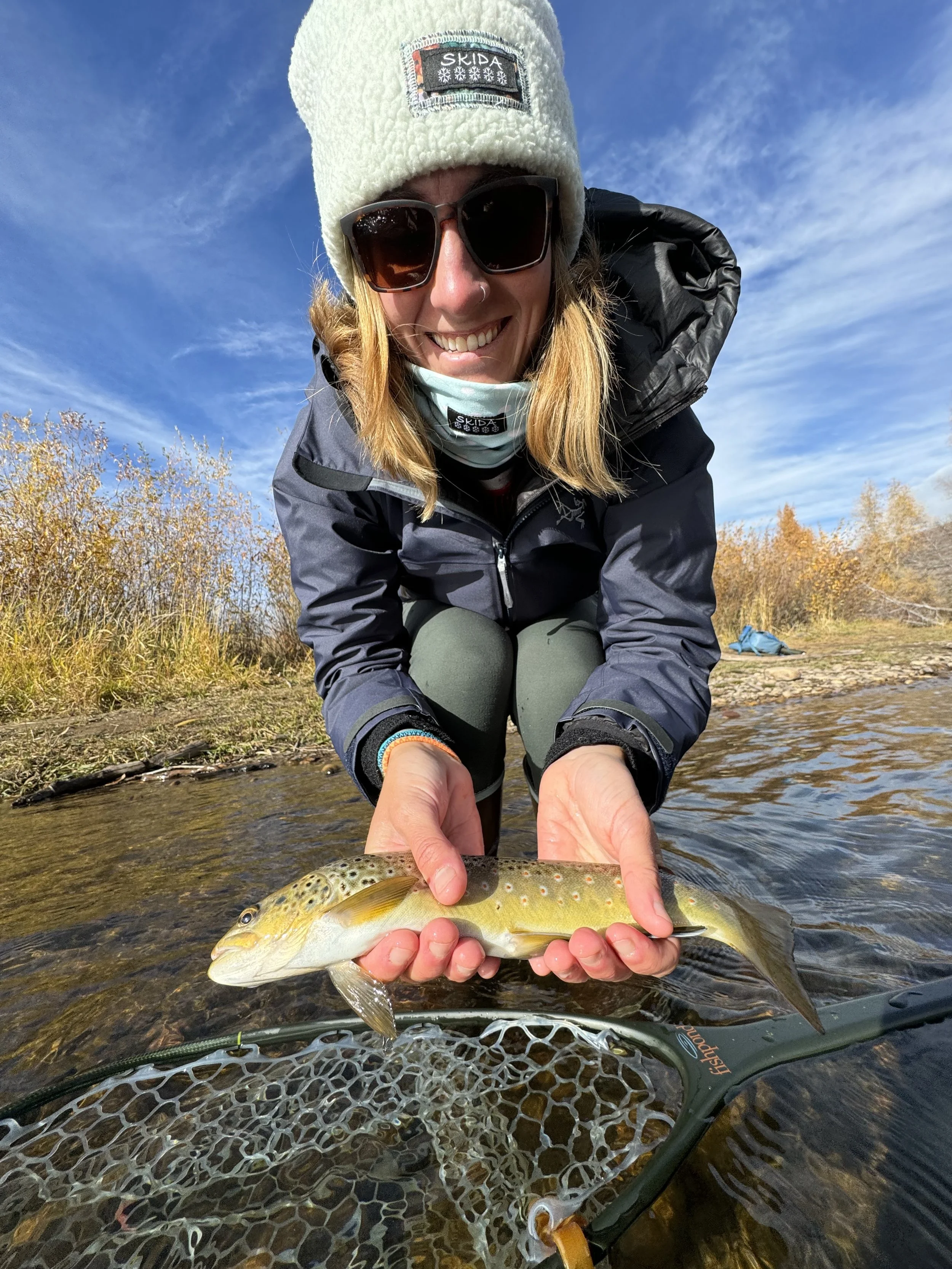
Anneka fly-fishing
Good question. I immediately think of my brother, who’s primarily a fly fisherman. As a skier, I don’t totally understand his way of spending time outside because he'll spend all day wading in some river in rural Wyoming and that’s fun for him whereas I like to be moving through the mountains on skis. But, at the end of the day, we’ll call each other and exchange stories about our adventures. What we have in common is this sense of wildness that we’re both craving. For me, that happens to take the form of looking for good snow, moving through new landscapes, and creating the perfect turns. For him, that wildness comes in the form of fly fishing, of figuring out where the fish are going to be biting on a particular day, designing the right fly for the job, and walking miles up some river to find peace and quiet and undisturbed fish habitats. So, we’re both trying to hone our outdoor craft and both working to seek out places that bring us a sense of wildness.
I think it's really important for recreationists of different types to talk to each other. It usually doesn’t have to be a long conversation for you to start to understand that there’s so much common ground and that we all are searching for those feelings of freedom and wildness in our own ways.
Lightning round (one or two word answers):
Most used piece of gear: Skida headband
A place you want to visit: Morocco’s Atlas Mountains
Another advocate you admire: Dr. Ayana Elizabeth Johnson
Favorite close to home spot: The Mill D glade (if you know, you know)