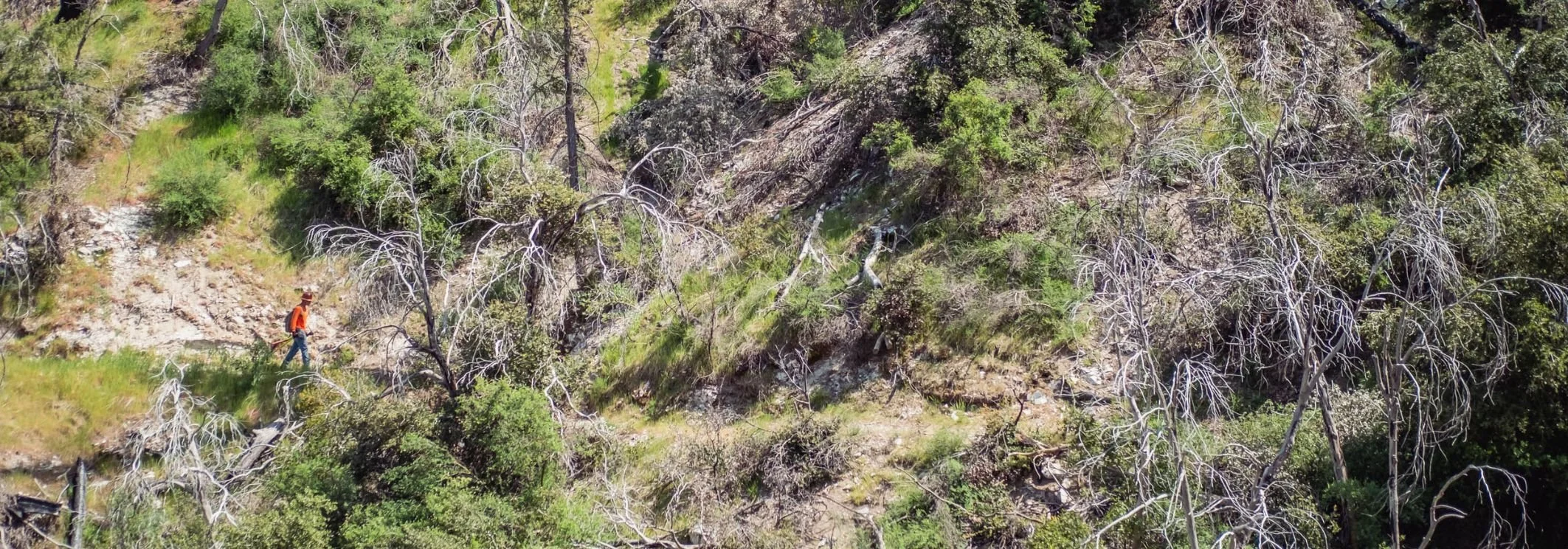
Image: Gabe Tiller
The legacy Restoration Fund
Passed by Congress in 2020, the Great American Outdoors Act (GAOA) dedicated billions in funding for the maintenance backlog on public lands through the Legacy Restoration Fund (LRF). Since its passage, the Legacy Restoration Fund has restored recreation assets at parks and public lands that are important to the outdoor community, such as trails, campsites, restrooms, ranger stations, roads, bridges, and other critical infrastructure that supports visitor experiences.
Despite considerable progress, federal land managers still face a $41 billion backlog. Inadequate appropriations from Congress, coupled with a lack of staff and resources have resulted in thousands of projects being delayed. With visitation to public lands and waters steadily increasing, it’s time for Congress to renew funding to support infrastructure repairs and improvements.

Map of USFS projects and their current status (Oct 2025)
In the Senate, Senators Steve Daines (R-MT) and Angus King (I-ME) have led the bipartisan effort to extend LRF through the America the Beautiful Act. Their legislation would extend the Legacy Restoration Fund through 2033, allowing land management agencies to keep tackling long-overdue maintenance projects on public lands. Their bill recently passed out of committee, and will get a floor vote soon.
The effort is also gaining momentum in the House. House Natural Resources Committee Chairman Bruce Westerman and Ranking Member Jared Huffman introduced separate bipartisan legislation to extend the LRF called the Great American Outdoors Act 250. Their bill had a committee field hearing, a significant step forward and an encouraging sign that lawmakers from both parties recognize the importance of maintaining America’s public lands. Learn more and ask your lawmakers to pass a bill before July 4:
Funds from the Legacy Restoration Fund (LRF) have been divided across land management agencies: The National Park Service has been awarded 70% of funds, 15% has gone to the U.S. Forest Service, and 5% has been allocated to the U.S. Fish and Wildlife Service, 5% to the Bureau of Land Management (BLM), and 5% to Bureau of Indian Education.
Projects funded through the Legacy Restoration Fund (LRF) have made a noticeable difference for public land users. In Washington, Denny Creek Trailhead received funds to expand parking access. In Montana’s Flathead National Forest, popular rental cabins were restored. And in Nevada, Red Rock Canyon saw repairs to trails and bathroom facilities. These kinds of investments improve safety, access, and overall visitor experience.
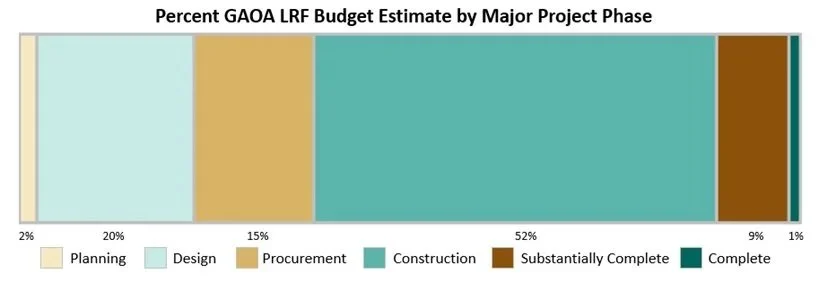
Although some major projects have started and completed, federal land management agencies are still facing a significant number of deferred maintenance projects. The table below (source: DOI) shows the budget estimate of projects within the agency, and the status they’re currently in.
Renewing the Legacy Restoration Fund is about more than fixing broken infrastructure—it’s about keeping our public lands safe, accessible, and sustainable for future generations. As more people turn to the outdoors for connection, adventure, and wellbeing, Congress must continue investing in the places they love.
If you’ve ever hiked, biked, skied, or camped on public lands, now is the time to speak up. Tell your lawmakers in the form below that you support passing legislation that would renew the Legacy Restoration Fund and invest in our nation’s parks and public lands.
Read More


Outdoor Alliance brought nearly 60 outdoor recreation advocates to Washington D.C. to meet with lawmakers and the administration to advocate for protecting backcountry forests, investing in recreation infrastructure, and keeping public lands public.